

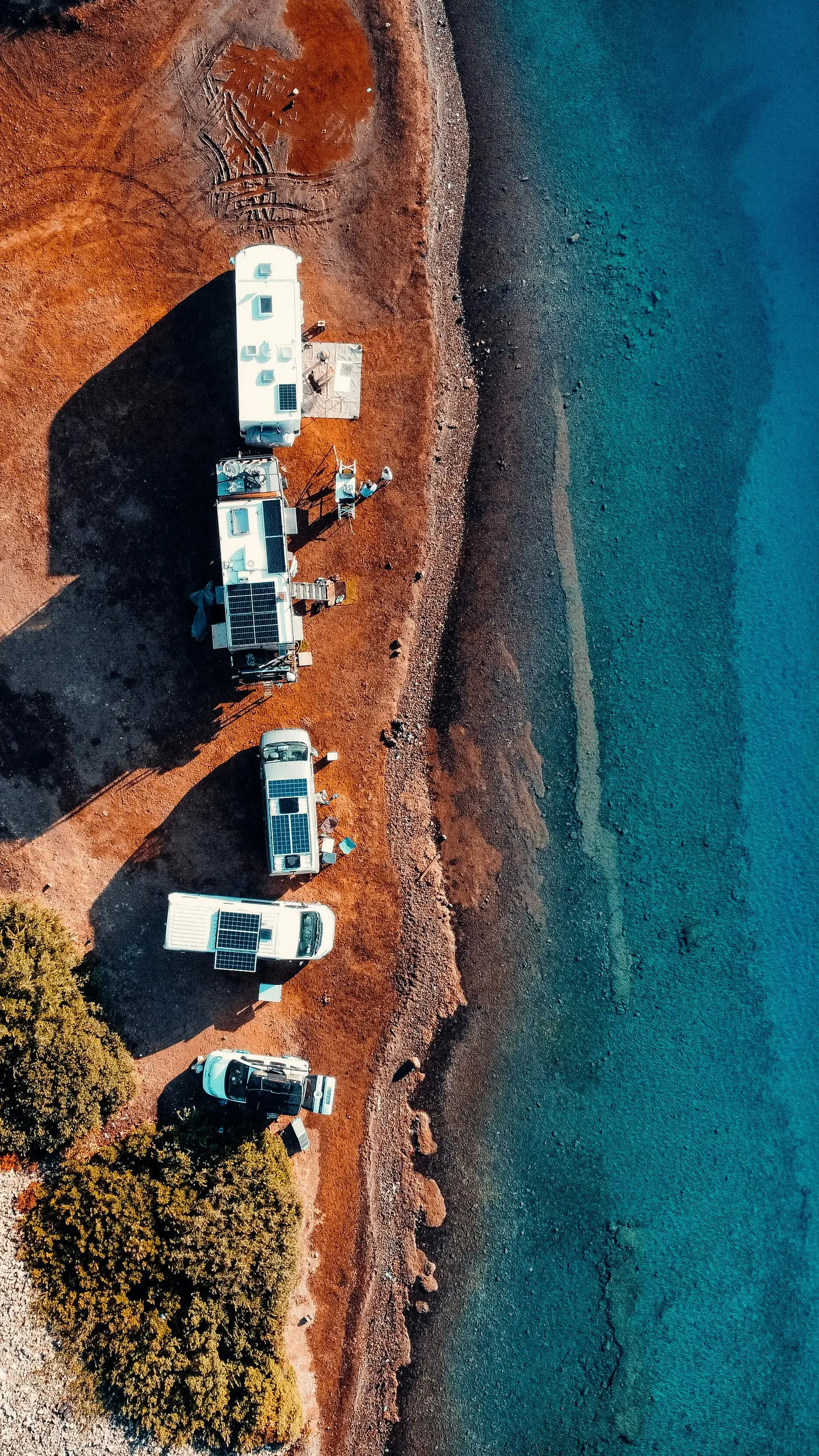
If you have ever pulled into a free camp after a long day of driving and realised there are no powered sites, you understand why motorhome solar systems have become so popular. For Australian travellers, particularly those who spend time in remote areas, national parks, and free camps far from caravan parks, solar is not a luxury. It is the system that keeps the fridge cold, the lights on, and the devices charged without relying on anyone else’s power.
Whether you are a retiree planning an extended lap of Australia or a weekend adventurer who values independence, solar gives you the freedom to camp where you want, for as long as you want. This guide covers how motorhome solar systems work, the choice between portable and permanent setups, what output you can realistically expect, and the practical steps for planning your campervan solar setup.
How a Motorhome Solar System Actually Works
A motorhome solar system has four core components that work together. First, solar panels—mounted on the roof or set up as portable ground panels—capture sunlight and convert it into DC electricity. Second, a charge controller sits between the panels and the battery, regulating the charge to prevent overcharging. An MPPT (Maximum Power Point Tracking) controller is more efficient than a basic PWM controller and is recommended for most setups. Third, the battery bank stores the energy for use when the sun is not shining. This is your house battery, typically lithium or AGM. Fourth, an inverter converts 12V DC battery power into 240V AC power for running household appliances.
The system is straightforward: solar panels for motorhomes generate power during the day, the charge controller feeds it safely into the battery, and the battery stores it for use day and night. The inverter only comes into play when you need to run 240V appliances. Many motorhome essentials like lights, the fridge, and USB charging run directly off 12V without needing an inverter at all.
Portable or Permanent: Choosing Your Campervan Solar Setup
Roof-mounted (permanent) panels are fixed to the roof of the motorhome. They are always in position, require no setup at camp, and work while you are driving. The trade-off is that they cannot be repositioned to follow the sun, and any shade over the van like trees or buildings reduce output significantly.
Portable (folding) campervan solar panels are set up on the ground at camp and connected to the battery via a cable. They can be angled directly at the sun for maximum output and repositioned throughout the day. The trade-off is that they require setup and pack-down, take up storage space, and cannot generate power while driving.
Many experienced travellers use a combination: a moderate permanent array on the roof (200W to 400W) for baseline daily charging, supplemented by a portable panel that can be positioned in full sun while the van is parked in shade. This gives the best of both worlds, particularly in Australia where summer heat makes parking in shade a priority for comfort.
How Much Power Can You Realistically Expect?
In Australian conditions, a 200W solar panel in full sun will typically produce around 800Wh to 1,000Wh of energy per day during summer (roughly 4 to 5 peak sun hours). In winter or overcast conditions, output drops to around 400Wh to 600Wh. This is enough to run a 12V compressor fridge, LED lighting, a water pump, and charge phones and tablets—the daily essentials for most travellers.
Working Out How Much Power You Need
A simple approach: keep a one-day power diary. Note every appliance you use and for how long, then look up its power consumption. A 12V compressor fridge draws approximately 30 to 60Ah per day. LED lights use 1 to 5Ah per hour. Device charging adds 10 to 20Ah. Total your daily consumption, and size your solar for your RV’s system to replace that amount on an average day, with some buffer for cloudy periods.
Monocrystalline vs Polycrystalline Panels: Does It Matter?
Monocrystalline panels are more efficient per square metre, making them the better choice where roof space is limited, which is most campervans. Polycrystalline panels are slightly cheaper but need more area to produce the same output. In practice, both perform well in Australia’s generous sunshine. If space is tight, go monocrystalline. If budget is the priority and you have room, either type will do the job.
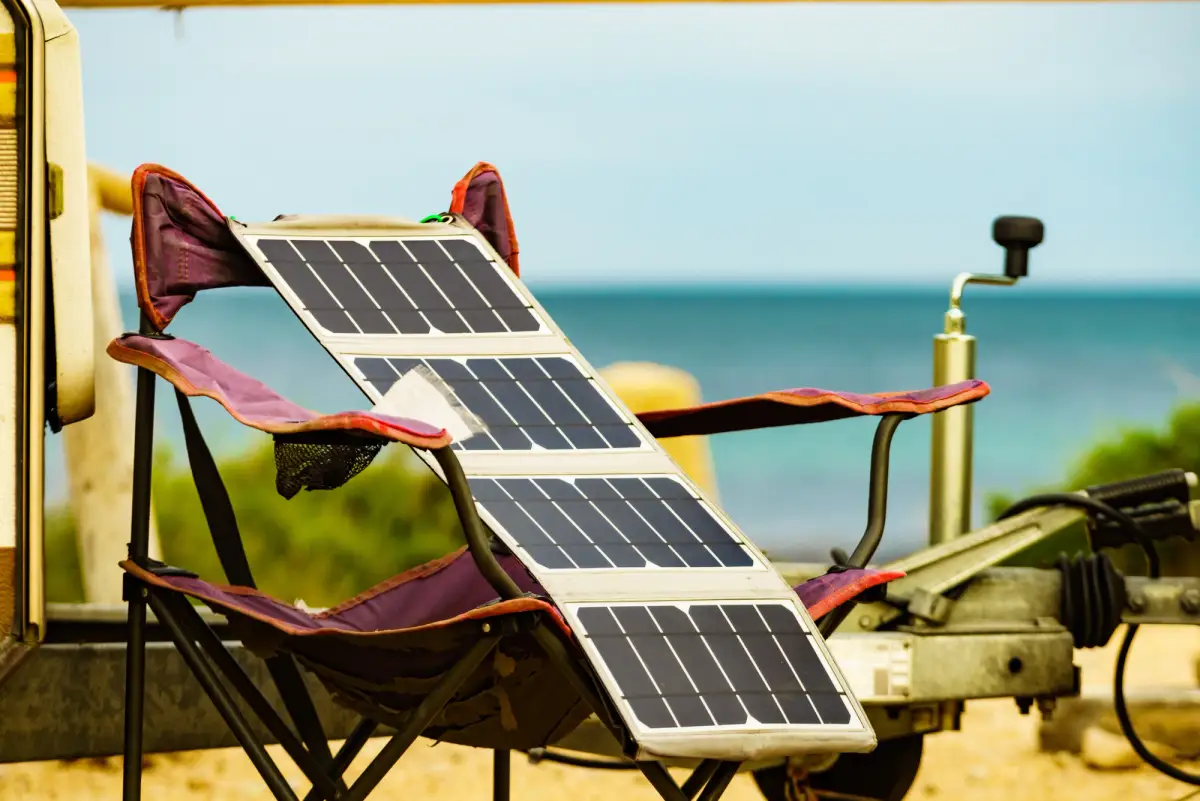
Portable solar panel laid out on a camp chair
Planning Your Campervan Solar Setup: Key Steps Before You Buy
Before purchasing solar panels for your motorhome, work through these steps:
- Assess your daily power needs using the diary method above
- Check available roof space accounting for air conditioners, hatches, and antennas
- Choose your battery type (lithium pairs best with solar due to its faster charge acceptance and deeper discharge capability)
- Find a qualified auto electrician for installation. Permanent roof-mounted systems with DC-DC chargers and wiring should be installed by a licensed professional for safety and insurance compliance
Getting the installation done professionally also means the work is documented, which matters if you ever need to make an insurance claim that involves your electrical system.
Solar Upgrades and Your RV Insurance: What to Tell Your Insurer
Adding or upgrading a motorhome solar system is a modification that changes the value of your vehicle. It is important to let your insurer know so your cover reflects the true replacement cost of your motorhome and its equipment. If you do not disclose modifications and need to make a claim, you may find your payout does not cover what it would actually cost to replace the system.
This is a straightforward step, not a complicated one. A quick call or email to your insurer with details of what has been added is usually all it takes. At KT Insurance, we understand that solar systems, lithium batteries, and power upgrades are a normal part of motorhome ownership for Australian travellers. Our agreed value cover accounts for the full value of your vehicle including modifications.
Keep Exploring with Confidence
Solar gives you freedom. The freedom to camp where you want, stay as long as you like, and travel without depending on powered sites. A few informed choices upfront about panel size, battery type, and charge controller make the whole experience smoother and more reliable.
Adventure with confidence
Specialist RV insurance that covers your motorhome for life on the open road