

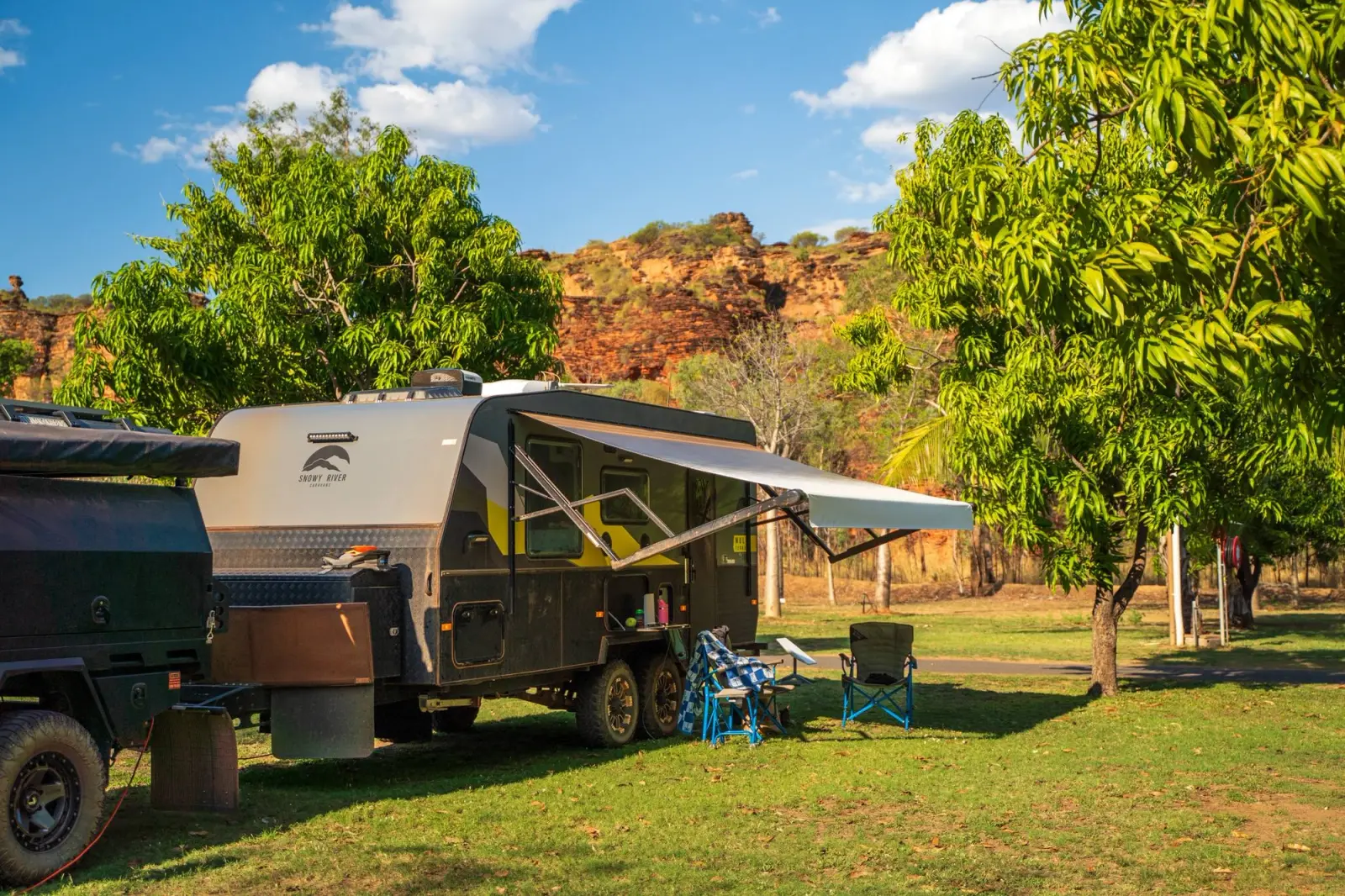
The Awning That Makes Your Site Feel Like Home
Every home needs a living room, and when you're travelling, an electric awning for your caravan or motorhome can help create one wherever you pull up. More than just shade from the sun or shelter from a passing shower, an awning extends your living space outdoors, turning a campsite into somewhere you can truly relax and settle in.
It's where morning coffees become a ritual, where family dinners stretch long into the evening, and where you can put your feet up after a day on the road. Add a few camp chairs, some lighting and your favourite creature comforts, and it's easy to create a space that feels surprisingly close to home.
While electric awnings are designed to make life on the road easier, not all models are the same. Features, sizes, operation and suitability can vary depending on your setup and travel style. In this guide, we'll walk through how electric caravan awnings work, the key features to look for, their advantages and limitations, and how to choose the right option for your caravan or motorhome.
Cover Built for Life on the Road
Over 30 years protecting Australian motorhome owners. Get your free quote or call us on 1300 261 261.
Where Electric Awnings Fit Among RV Awning Types
An electric caravan awning is one of the most convenient options available among modern RV awnings, allowing you to extend or retract your outdoor living space with the push of a button. They’re particularly popular among grey nomads, where ease of setup is a priority.
Of course, there were awnings before electric ones. Traditional roll-out awnings offer near-identical coverage, but require manual operation. This does make them more affordable and could be the better option for some travellers.
Box awnings store neatly inside a protective cassette when retracted, giving them a sleek appearance and added protection from the elements. Bag awnings are another common option, found on camper trailers and lightweight campers, where simplicity, lower cost and reduced weight are important considerations.
Inflatable awnings, meanwhile, create a larger enclosed living area using air-filled beams, which makes them popular with caravan travellers who plan to set up camp for longer stays.
While each type certainly has its place, electric awnings strike that balance between comfort, convenience and usability, making them a popular choice for caravans and motorhomes that spend plenty of time on the road.
How an Electric Caravan Awning Compares to a Manual One
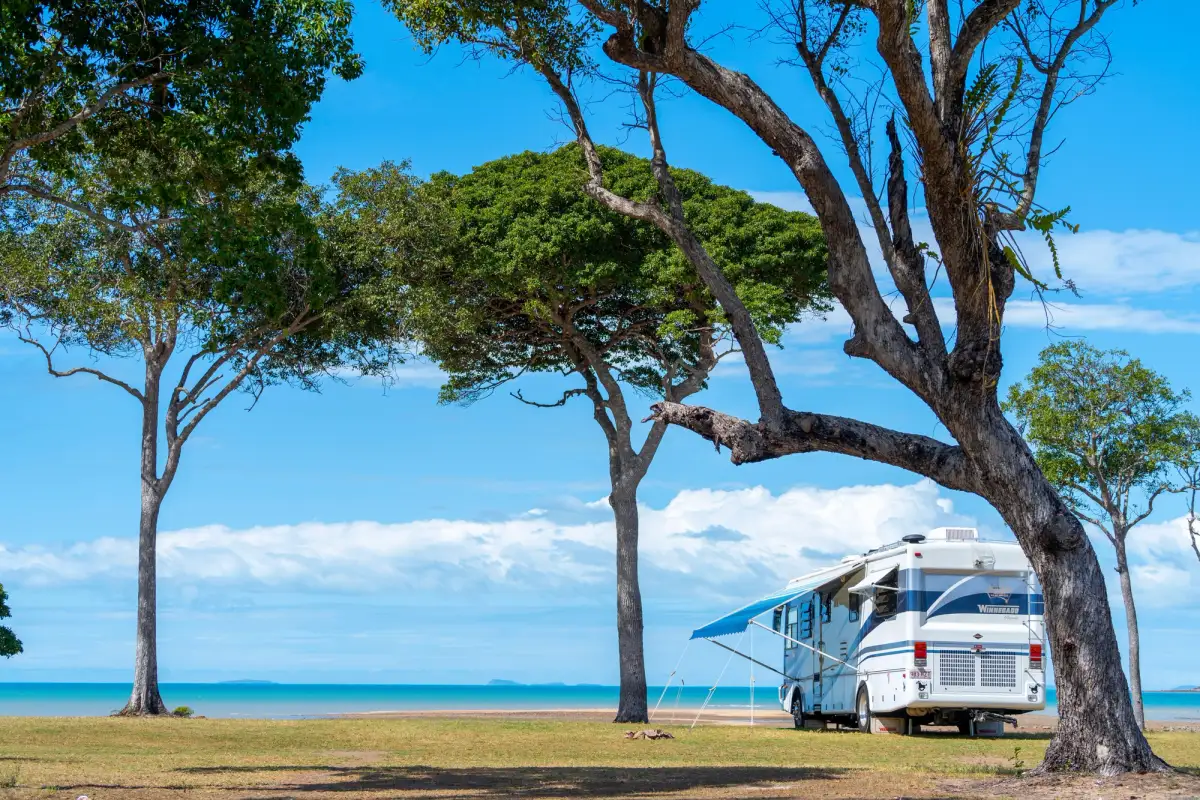
A motorhome in Australia with its awning extended by the beach
When it comes to choosing an awning, there’s no clear winner. The right option depends on how you travel, how often you use your outdoor space, and the features that matter most to you. An electric caravan awning offers convenience and simplicity, while a manual caravan awning can be a practical choice for travellers who prefer a more hands-on setup.
The biggest difference is in operation. Electric awnings extend and retract at the push of a button, making it quick and easy to create a comfortable outdoor living area when you arrive at camp. This can be especially appealing for travellers who move frequently or like to make the most of every stop.
An electric awning allows travellers to create a shaded outdoor living space quickly and easily using push-button operation. Compared with manual awnings, electric models require less physical effort, are faster to deploy and can make everyday camping more convenient, especially for frequent travellers and motorhome owners.
Manual awnings, on the other hand, require a little more effort to set up and pack away. Some travellers appreciate this simplicity and are happy to deploy their awning only when conditions are right, such as on sunny afternoons or during longer stays.
Ultimately, both styles serve the same purpose: creating a sheltered space where you can relax, dine and enjoy life outdoors. The best choice is the one that complements your travel habits and helps you get the most from your time on the road.
The Convenience of Electric Awnings
Humans are wired to seek convenience. If something can be made easier without changing the end result, chances are we'll find a way to do it. While an electric awning isn't revolutionary technology, it does remove much of the effort involved in creating a comfortable outdoor space at camp.
For grey nomads and retirees in particular, the appeal is easy to understand. Rather than dealing with arms, straps and manual winding, an electric awning caravan can be extended or retracted at the push of a button. After a long day on the road, having your outdoor living area ready in moments can make settling into camp feel that little bit easier.
Some of the everyday benefits include:
- Quick setup and pack down when arriving at or leaving camp
- Less physical effort compared with manual operation
- Easier use for solo travellers
- More time spent relaxing and enjoying your campsite
- Simple operation for frequent travellers who move regularly
Whether you're stopping for one night or staying for a week, the convenience of an electric awning can help make your campsite feel more comfortable, welcoming and ready to enjoy.
When a Manual Awning Still Makes Sense
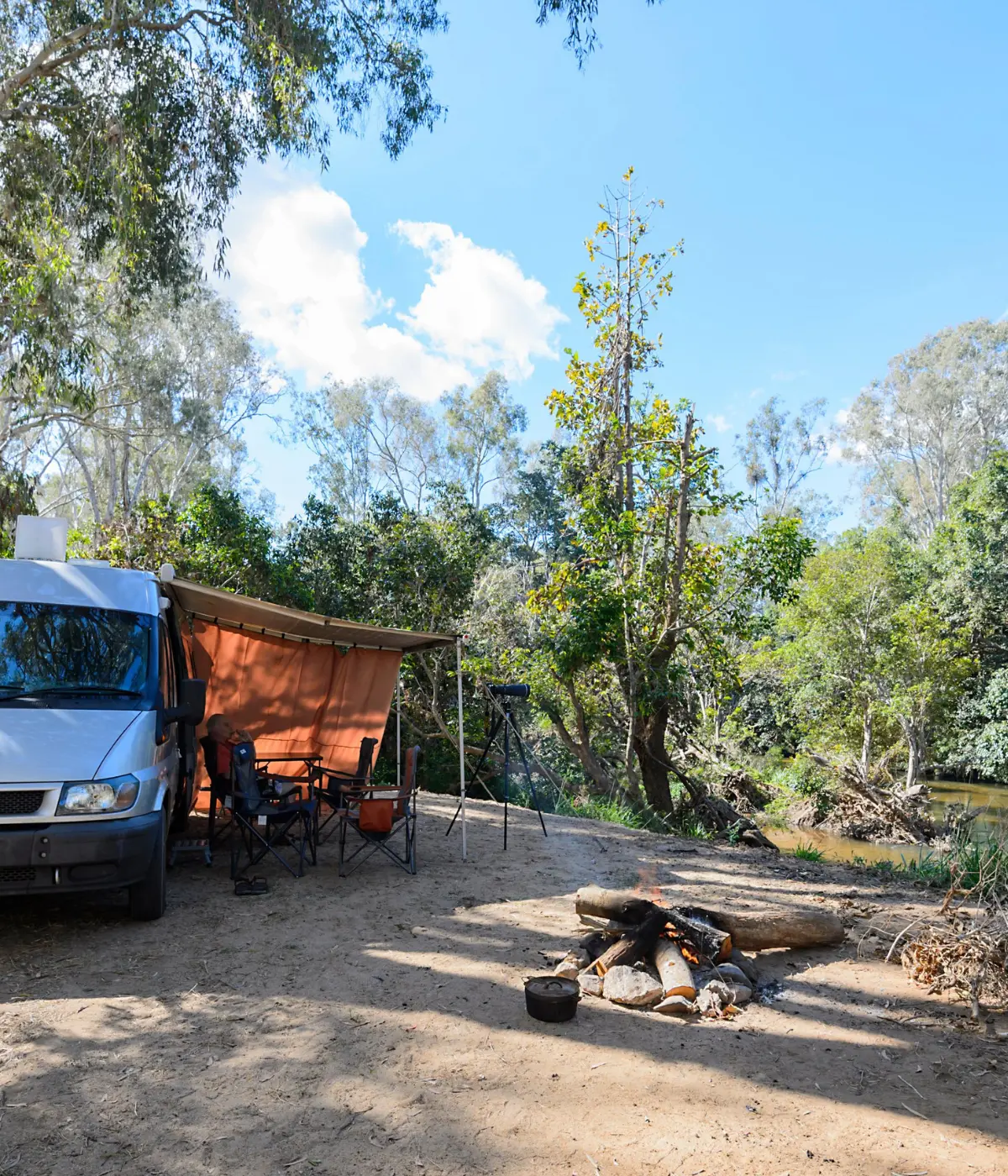
An awning set up at a campsite in Australia
At the end of the day, an electric awning won't be for everyone. While push-button operation is appealing, a manual awning provides the same essential function: creating a comfortable, sheltered outdoor space beside your RV. The difference often comes down to personal preference and the type of travel you enjoy.
Many travellers appreciate the simplicity of manual awnings. With fewer moving parts and a straightforward design, they offer a practical setup that has been serving caravan and camping enthusiasts for decades. They're also commonly found on lighter touring setups, where weight and simplicity are important considerations.
A camper trailer awning, for example, is often manually operated and well suited to travellers who enjoy setting up camp and staying put for a few days. The same can be true for campervans and other lightweight rigs, where a simple roll-out awning can provide all the shelter needed for cooking, relaxing or escaping the sun.
Ultimately, neither option is inherently better. Whether you choose an electric or manual awning will depend on your vehicle, your camping style and how you like to spend your time on the road.
What to Weigh Up Before Choosing an Electric Awning
An electric caravan awning can make life on the road more comfortable, but before choosing one, there are a few practical questions worth considering. Every caravan awning needs to suit not only your travel style, but also your RV's size, layout and power setup.
Matching Size and Mounting to Your RV
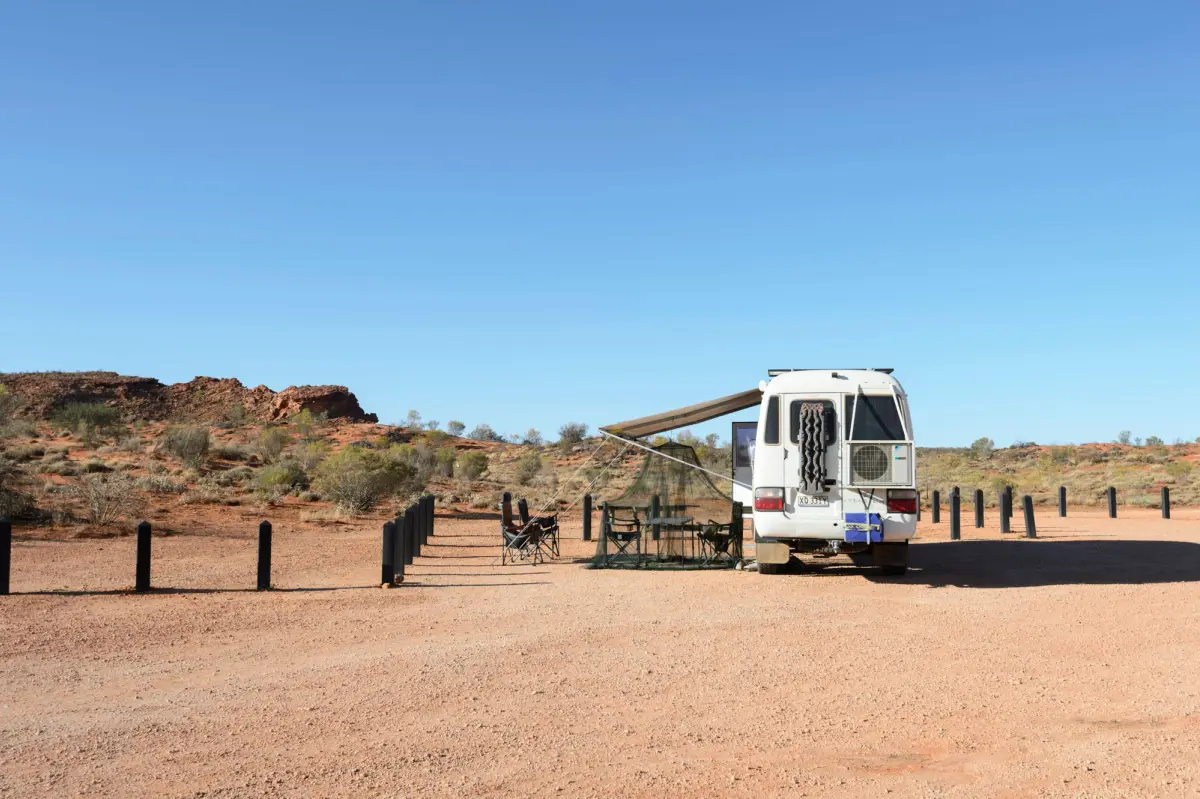
A motorhome in Australia with its awning extended
Not every awning suits every RV. The overall length of your vehicle and the amount of available wall space will largely determine what size awning can be fitted and where it can be mounted.
Larger caravans and many motorhomes used by Australian travellers can accommodate wider awnings with greater coverage, while a camper trailer awning is typically designed around a lighter, more compact setup. If you’re considering an electric model, it’s also worth checking that there’s a suitable power source available to operate the awning comfortably as part of your existing electrical system.
Weather, Durability and Everyday Use
An awning will spend much of its life exposed to the elements, so durability is an important consideration. Fabric quality, frame construction and features designed to respond to changing conditions can all influence how an awning performs over time.
When comparing options, consider:
- The quality and UV resistance of the awning fabric
- Whether the model includes wind-sensing technology
- How easily the awning can be retracted during adverse weather
- The level of shelter it provides from sun and light rain
- Warranty coverage and manufacturer support
Reading electric caravan awning reviews can also provide useful insight into how different models perform in everyday travel conditions. As with any RV accessory, the ideal awning is often the one that best suits your vehicle, travel habits and the places you enjoy exploring.
Popular Electric Awning Options in Australia
If you're researching an electric caravan awning, you'll quickly notice there are several styles and brands commonly found across Australian caravans and motorhomes. Like many RV awnings, the right fit often depends on the vehicle itself, how the awning is mounted and the features that matter most to the traveller.
Australian RVers commonly encounter wall-mounted electric awnings, cassette-style awnings that store inside a protective housing, and models that pair with optional privacy screens or annex walls. Popular brands you may come across include Fiamma, Dometic, Carefree and Aussie Traveller. While specific products vary, most electric awnings share a similar goal: creating a comfortable outdoor living space with minimal effort.
| Feature | Common Electric Awning Options |
|---|---|
| Operation | Push-button extension and retraction |
| Mounting Style | Wall-mounted or cassette-mounted |
| Vehicle Types | Caravans, motorhomes and some campervasn |
| Fabric Materials | Acrylic or vinyl-based fabrics |
| Weather Features | Optional wind sensors on some models |
| Accessories | Privacy screens, lighting and annexe walls |
| Power Source | Connected to the RV electrical system |
As with any RV accessory, comparing specifications, sizing and installation requirements can help narrow down which options suit your particular setup. Choosing a well-known brand can also make replacement parts easier to source down the track.
Protecting Your Awning and the Lifestyle It Enables
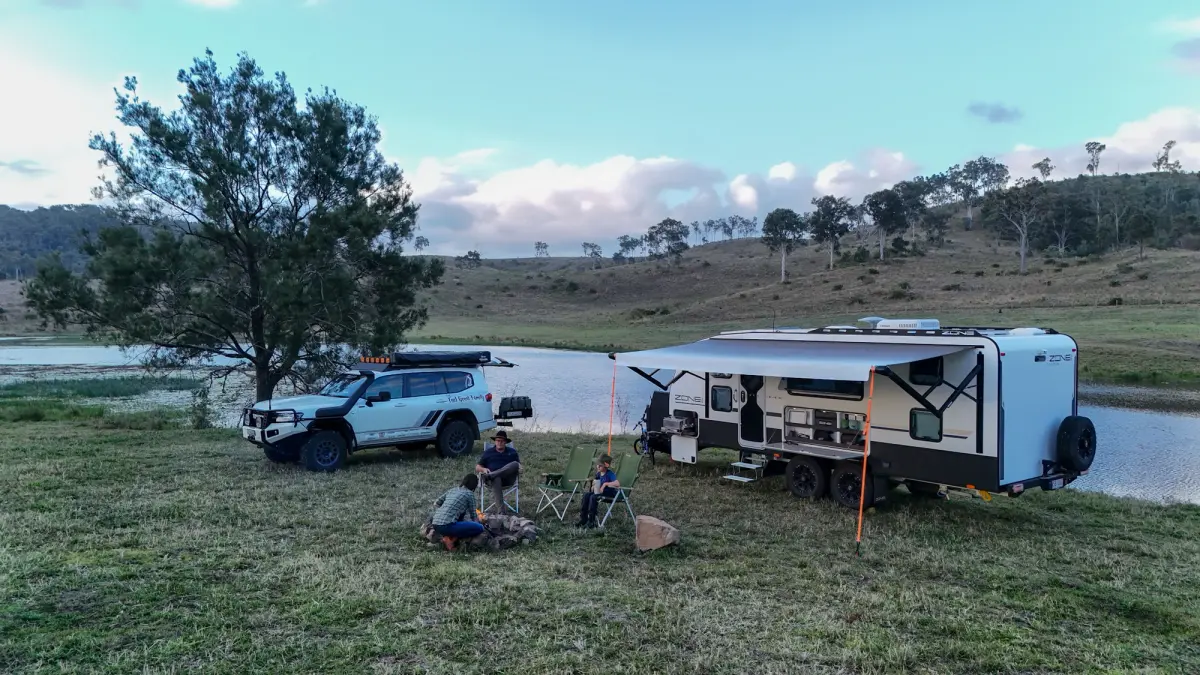
A family and their 4X4 and caravan at a campsite with the awning extended
An awning is more than a piece of equipment attached to your RV. It's the shaded spot where morning coffees are enjoyed, where friends gather for a chat, and where countless sunsets are watched from a comfortable camp chair. Looking after it isn't just about protecting the awning itself, but also the lifestyle and freedom it helps create.
Because awnings spend their lives outdoors, they're exposed to changing conditions and natural weather events. Strong winds, storms, falling branches and hail can all pose a risk if an awning is left extended when conditions deteriorate. Regular cleaning, routine inspections and retracting the awning when severe weather is expected can help reduce unnecessary wear and tear over time.
Even with careful use, the unexpected can happen when travelling. That's why many RV owners choose to understand what protection may be available for their vehicle and its accessories before heading off on their next trip.
Whether you're a weekend explorer or embracing life on the road full-time, KT Insurance's specialist motorhome insurance can help provide confidence for the adventures ahead, so you can spend more time enjoying the lifestyle your RV makes possible.
Cover Built for Life on the Road
Over 30 years protecting Australian motorhome owners. Get your free quote or call us on 1300 261 261.