

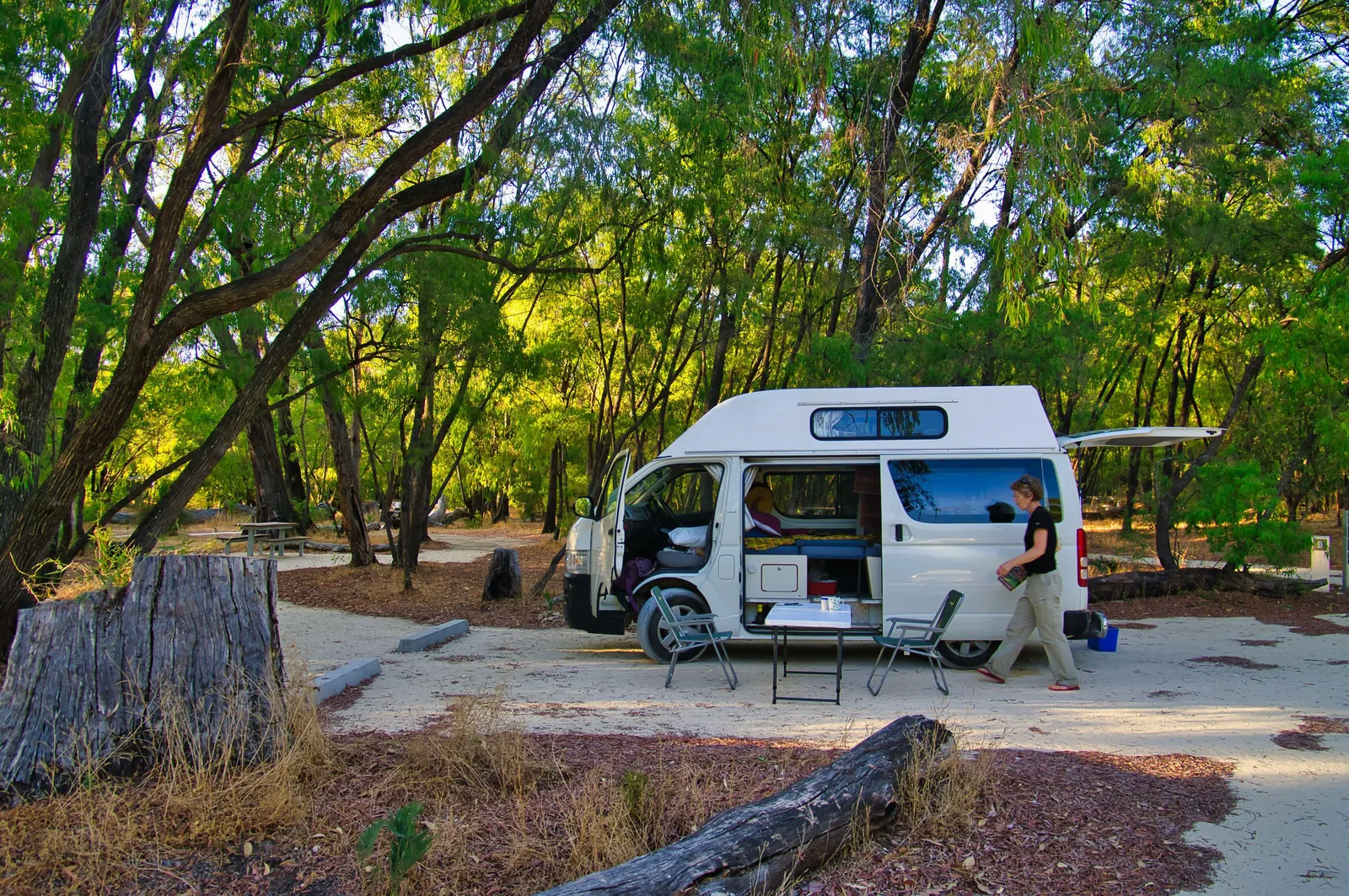
Few things test your patience faster than opening the door of a campervan that's been sitting in the Australian summer sun all afternoon. The steering wheel is scorching, the seats feel like a hotplate and the air inside can be downright oppressive.
That's why campervan airconditioning is a topic that comes up regularly among both new and experienced RV owners. After all, your campervan isn't just a vehicle, but your home away from home. If you're chasing winter sunshine in Queensland or exploring the Red Centre in the shoulder seasons, staying comfortable can make a huge difference to your travel experience.
The good news? Keeping cool isn't all about running an air conditioner around the clock. With the right setup, smart camping habits and a few practical upgrades, you can create a more comfortable space no matter where the road takes you. Here's what every traveller should know.
Cover Built for Life on the Road
Over 30 years protecting Australian motorhome owners. Get your free quote or call us on 1300 261 261.
Shade, Airflow and Simple Setup Choices That Cool a Campervan Fast
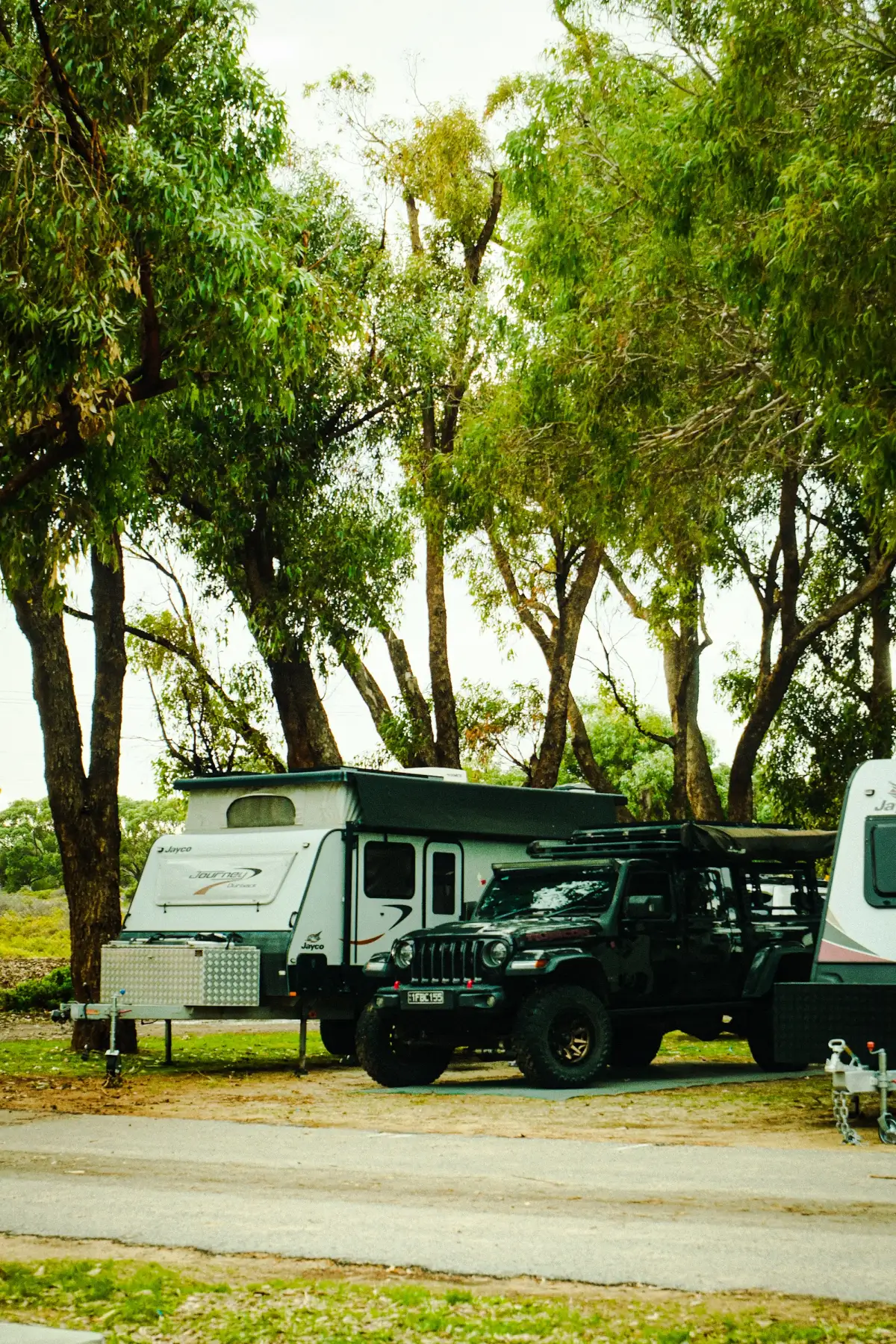
A Jeep and caravan parked in shade at a caravan park
Before investing in powered cooling systems, it’s worth remembering that some of the best ways to cool an RV cost very little and can dramatically reduce temperatures inside your van or motorhome.
If you’re wondering how to keep a caravan or motorhome cool in summer, start with where and how you park.
Park Smart and Use Shade to Your Advantage
A little planning when you pull into camp can make a world of difference.
Whenever possible:
- Park under natural tree cover
- Position your fridge side of the van away from the harsh afternoon sun
- Deploy awnings as soon as you set up
- Use shade cloth to create additional protection
- Install reflective windscreen and window covers
These simple measures help prevent heat from building up inside the van before you even think about switching on cooling equipment.
Any seasoned traveller will tell you around a campground happy hour that preventing heat is often easier than removing it later.
Boost Airflow With Vents, Windows and Cross-Breezes
Fresh air movement is one of the most effective ways to stay comfortable.
Open windows on opposite sides of your RV, creating natural cross-breezes that move hot air outside. Use roof hatches and vents to help release trapped heat that naturally rises to the ceiling and before you know it, that stuffy interior becomes just as cool as under the awning just a few steps outside.
Creating this good airflow can noticeably reduce your reliance on campervan airconditioning during mild weather and cooler evenings.
On days where that heat really starts to seep in, it can also pay to close windows and blinds during peak afternoon temperatures, then open everything up again once the outside air begins to cool.
Caravan Cooling Fans and Portable Options
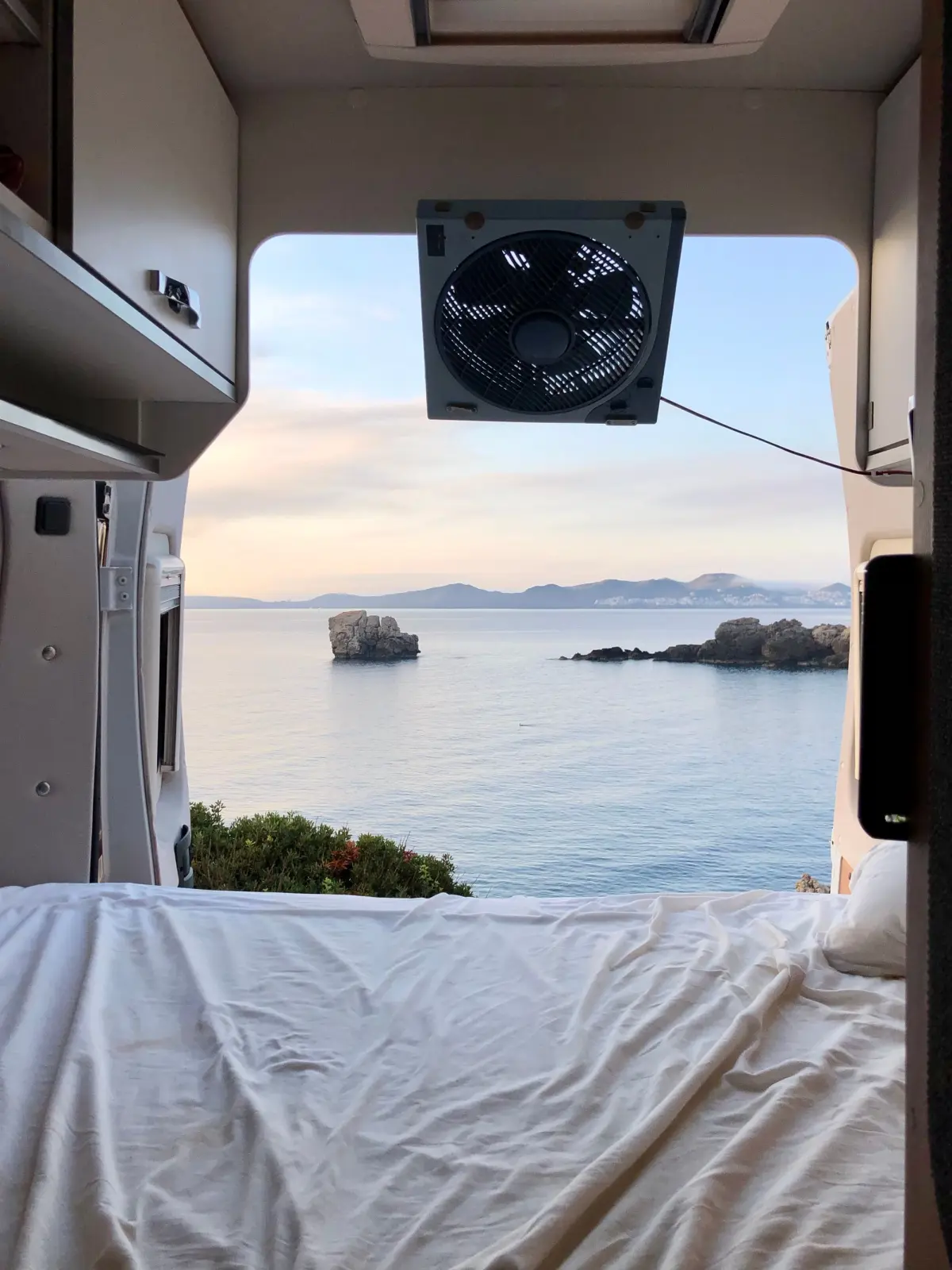
A portable fan on the roof of a campervan looking out over the ocean
A quality caravan cooling fan can provide impressive comfort without the power demands of a full air-con system.
Whether you’re connected to mains power or trying to stretch your batteries on board, a well-positioned portable caravan fan can keep air circulating throughout the van and make warm nights far more comfortable.
Popular options include:
- 12V roof-mounted extraction fans
- Oscillating cabin fans
- Clip-on fans for sleeping areas
- Portable rechargeable fans
When comparing cooling fans, look for:
- Strong airflow performance
- Low power consumption
- Quiet operation
- Flexible mounting options
For many, a fan is one of the most cost-effective and easy to install cooling upgrades available and is particularly useful for off-grid camping when power resources are limited.
Campervan Airconditioning Units: What To Know
When temperatures really climb (it’s Australia, it’s inevitable), campervan air conditioning becomes the most effective way to cool your living space.
The most common options include roof-mounted units, under-bunk air conditioners, split systems and portable units. Each has advantages depending on your vehicle, travel style and power setup.
As more Australians embrace RV travel, caravan air conditioning options across Australia for caravans, campervans and motorhomes have become increasingly diverse, giving owners more choice than ever before.
| Type | Power Draw | Best For | Noise Level |
|---|---|---|---|
| Roof-mounted | Higher | Most campervans and motorhomes | Moderate |
| Under-bunk | Moderate | Vans with limited roof space | Low to moderate |
| Split-system | Moderate to high | Long-term setups | Low |
| Portable Unit | Moderate | Occasional use | Moderate to high |
Choosing the Right Air Conditioner for Your Van
One of the most common questions owners ask is: which air conditioner suits my RV?
The answer to that will depend on your setup rather than one specific product.
A compact campervan may only need a smaller unit, while larger motorhomes often require more powerful cooling systems.
Before purchasing, consider:
- Internal van size
- Available roof space
- Battery capacity
- Access to powered sites
- Typical travel destinations
Air conditioners can place significant demands on electrical systems, especially when operating off-grid. Understanding those requirements upfront helps avoid costly surprises later.
Maintenance Tips To Keep Your Unit Running Well
Like any appliance, your air conditioner performs best when it's looked after properly. A few simple maintenance habits can help extend its life:
- Clean or replace filters regularly
- Check vents for dust and obstructions
- Inspect seals for signs of wear
- Keep condenser areas free of debris
- Arrange professional servicing as recommended
Good maintenance helps maintain cooling efficiency and reduces the likelihood of breakdowns during a trip. While regular upkeep goes a long way, it's also worth considering specialist RV insurance that can help protect your campervan against covered storm and weather-related events while you're exploring Australia.
Keeping Your Campervan Cool Off-Grid
One of the biggest challenges for those who love remote camping is learning how to keep their caravan cool off-grid without access to mains power.
Running traditional air conditioning systems from batteries alone can be difficult, particularly during extended stays.
For most off-grid travellers, a combination of solar panels, lithium batteries and efficient 12V fans provides the best balance between comfort and power consumption.A few simple campsite habits can also make a noticeable difference:
- Choose shaded campsites where possible
- Cook outdoors during hot weather
- Open roof vents overnight
- Create natural crossflow through the van
- Set up awnings early in the day
Many experienced travellers find that combining passive cooling methods with efficient ventilation creates a surprisingly comfortable environment without constantly relying on air-con.
Travel Cool, Travel Confident

Caravan park
Everyone has their own tricks for surviving summer on the road, but the fundamentals remain the same: seek shade, maximise airflow, use quality fans, choose the right air conditioning setup and plan ahead for off-grid adventures.
By combining smart campsite choices with suitable cooling equipment, you’ll be far better prepared for the Australian summer, and free to enjoy the freedom of the open road. Explore KT Insurance's specialist RV cover for extra protection on every trip.
Cover Built for Life on the Road
Over 30 years protecting Australian motorhome owners. Get your free quote or call us on 1300 261 261.