

Campervan Ceiling Ideas: Why Your Ceiling Deserves Attention
While a view of the twinkling night sky might be more synonymous with an Australian night in the bush, a well-finished campervan ceiling can be just as comforting. When exploring campervan ceiling ideas, it's easy to focus on the aesthetics and additional design elements like lighting, but the ceiling itself plays a big role in both comfort and appearance. After all, the last thing you want to wake up to is the drip of a leaking roof in your home away from home.
Whether you're planning a practical fit-out or looking to create a more stylish interior, choosing the right ceiling finish is an important part of the build. From classic timber linings that add warmth and character to soft-lined finishes that help reduce noise, there are plenty of options to suit different travel styles and budgets.
This guide explores some of the most popular campervan roof lining ideas, along with their advantages and considerations. We'll also look at lighting, insulation and other practical factors that can help create a comfortable space for travelling in Australia’s unique environment.
Cover Built for Life on the Road
Over 30 years protecting Australian motorhome owners. Get your free quote or call us on 1300 261 261.
Timber and Wooden Ceiling Finishes
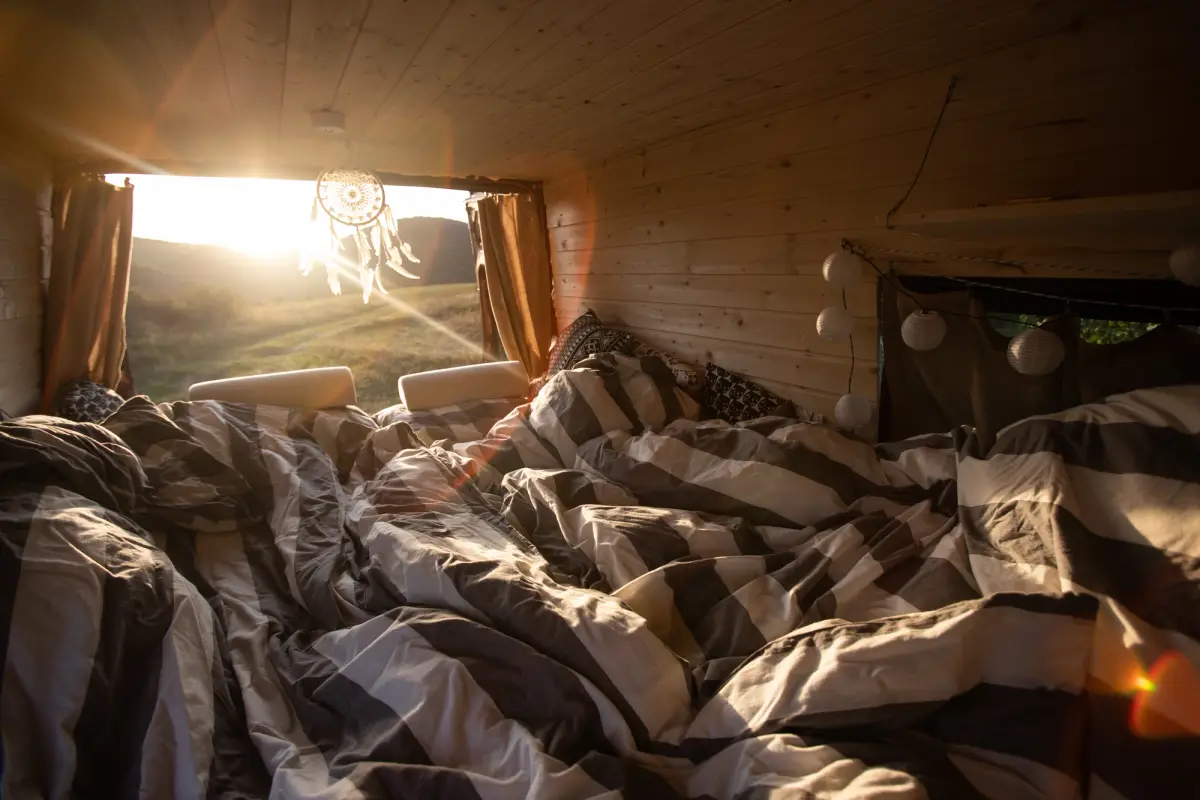
A campervan with plywood walls and ceiling with an open back door and bed
Timber remains one of the most popular campervan roof lining ideas, and it's easy to see why. It creates a warm, inviting atmosphere and can make a compact van feel more like a home away from home. Timber finishes are available in a range of styles, from traditional plywood panels to tongue-and-groove boards and decorative slat ceilings.
Plywood is a common choice for campervan ceiling panels thanks to its strength, versatility and ease of installation. Thicknesses typically range from 3mm to 12mm, so you can balance durability against weight. Baltic birch plywood offers a premium finish with excellent durability, while lighter options such as luan or pine plywood won’t chip away at your van’s GVM limit as quickly. When properly sealed, these materials can provide years of reliable service.
The best campervan ceiling material depends on your build goals. Plywood offers a balance of durability, weight and appearance, automotive carpet helps reduce noise and adds comfort, while composite and honeycomb panels provide excellent weight savings and moisture resistance. Most Australian campervan builders choose a material that balances comfort, durability, insulation and overall vehicle weight.
For travellers wanting a more traditional look, tongue-and-groove timber creates a cabin-inspired aesthetic, while timber slats or shiplap offer a modern, architectural finish. Keep in mind that solid timber products generally add more weight to a build than fabric or composite alternatives, so striking the right balance between appearance and practicality is important.
Timber ceiling options at a glance (weight and finish vary by material):
- Plywood panels: Durable, easy to install and suitable for most DIY conversions.
- Tongue-and-groove boards: Timeless appearance with plenty of character, but can add weight.
- Timber slats: Contemporary look that can help create a sense of height and space.
- Shiplap lining: Clean, coastal-inspired finish that suits many campervan ceiling ideas.
Fabric, Carpet and Soft-Lining Options
Who said carpet’s only for the floor? If warmth and comfort are priorities, fabric and carpet linings are popular van ceiling ideas worth considering. These materials create a softer feel inside the vehicle while helping to absorb road noise and reduce echoes, which can make longer trips more enjoyable.
Automotive carpet is widely used in campervan conversions because it is lightweight, flexible and capable of covering uneven surfaces. Fabric-backed ceiling panels offer a similar benefit and come in a variety of colours and finishes, making it easier to personalise the interior.
Another advantage of soft-lined campervan ceilings is their relatively low maintenance. Most modern automotive carpets are designed to resist mould and moisture when installed correctly, and many can be cleaned with a simple vacuum or spot treatment.
For travellers looking to maximise comfort without significantly increasing vehicle weight, fabric and carpet finishes remain some of the most practical campervan ceiling material choices available.
Lightweight Composite and Honeycomb Panels
For travellers looking to reduce weight without sacrificing strength, composite and honeycomb panels have become increasingly popular campervan ceiling material choices. These panels typically use a lightweight core sandwiched between thin outer layers, creating a rigid structure that weighs significantly less than many traditional timber products.
Honeycomb panels are commonly used in modern campervan and motorhome construction because they deliver a good balance of strength and weight. Their lightweight design can help keep overall vehicle mass down, which is particularly important for campervans operating close to their Gross Vehicle Mass (GVM) limits.
Composite panels offer a clean, contemporary finish and are available in a range of colours and surface textures. Many are also moisture-resistant and easy to wipe down, making them appealing for travellers who want a low-maintenance interior.
While composite and honeycomb panels may not provide the same warmth and character as timber, they can be an excellent option for those prioritising weight savings, durability and a modern aesthetic. They also pair well with insulation systems behind the ceiling lining, helping create a comfortable living space for travel throughout Australia's varied climates.
Adding Lighting and Style to Your Ceiling
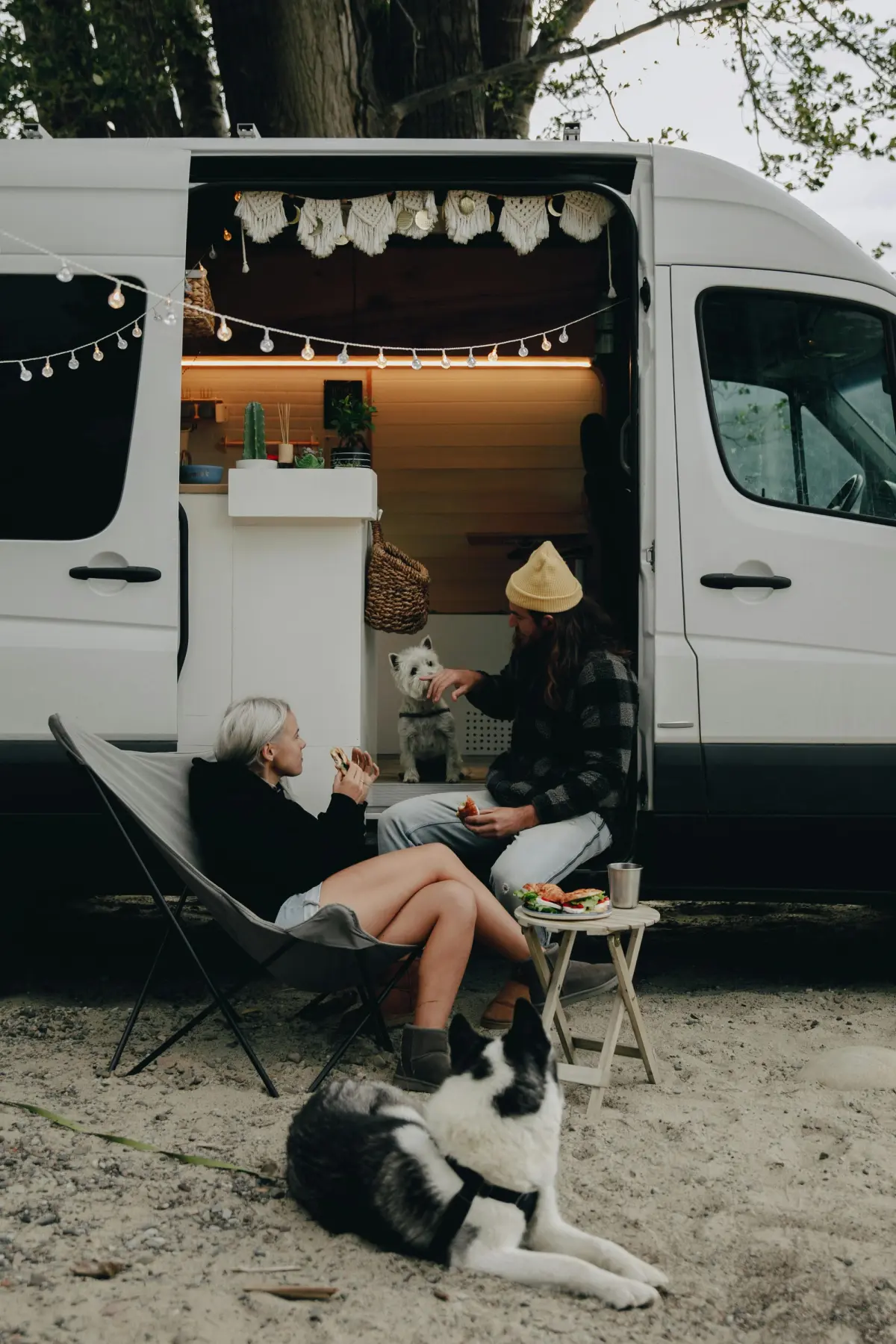
two people and their dogs in a campervan camping
While your eyes may be closed for much of the time you're facing your campervan ceiling, there's no denying its potential as a design centrepiece. As the largest uninterrupted surface inside the van, it offers the perfect opportunity to add personality while improving comfort and functionality.
Many van ceiling ideas focus on lighting, and for good reason. The right lighting can make a campervan feel warm and inviting at night while providing practical illumination when you're camped in a remote location. Popular camper van ceiling ideas include downlights, LED strip lighting and decorative fairy lights, each creating a different atmosphere.
Downlights are one of the most common choices for modern campervan builds. Installed directly into the ceiling lining, they provide bright, even lighting while maintaining a clean and uncluttered appearance. They're also relatively affordable, making them a practical option for most conversions.
LED strip lights offer flexibility and versatility. They can be concealed behind timber slats, cabinets or ceiling features to create soft ambient lighting without visible fixtures. Many are USB-powered, can be cut to length and are simple to install, making them particularly popular with DIY builders.
For those wanting a cosier feel, fairy lights add warmth and character to the interior. While they won't replace task lighting, they can help create a comfortable atmosphere that makes a campervan feel even more like a home away from home.
Insulation and Practical Considerations
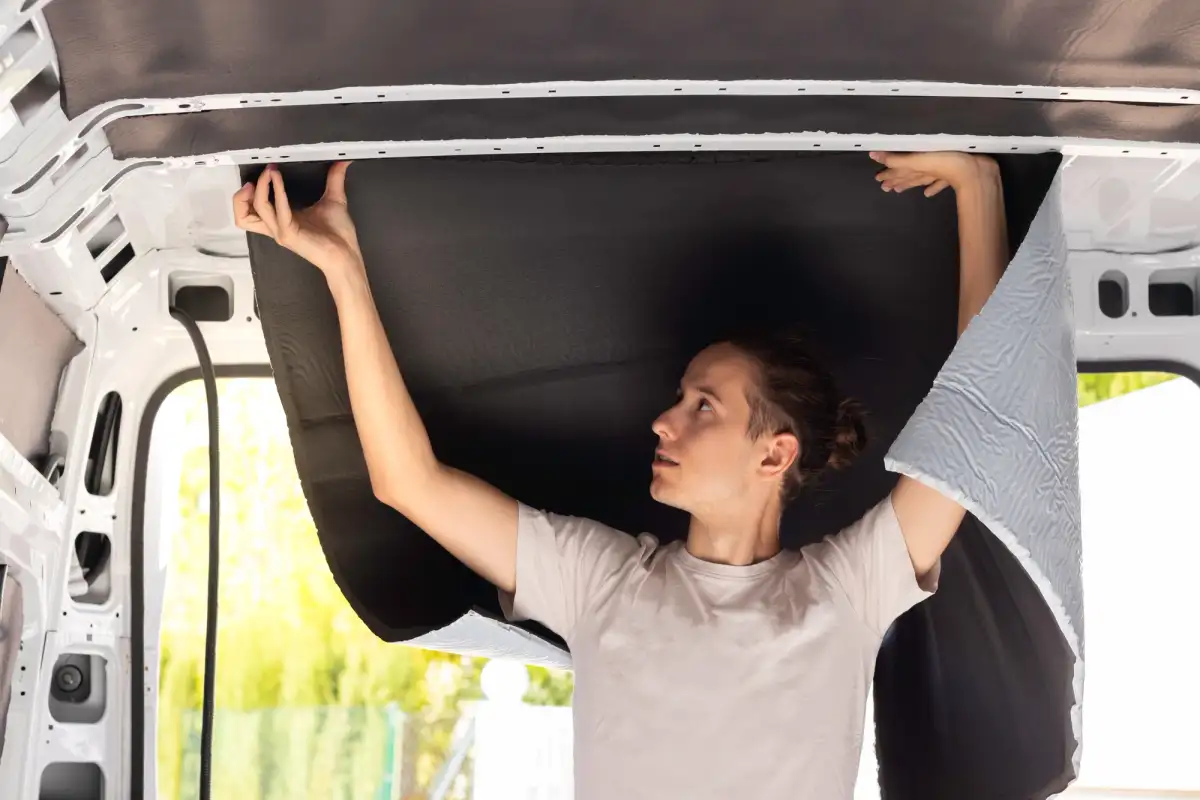
Installing insulation in a campervan
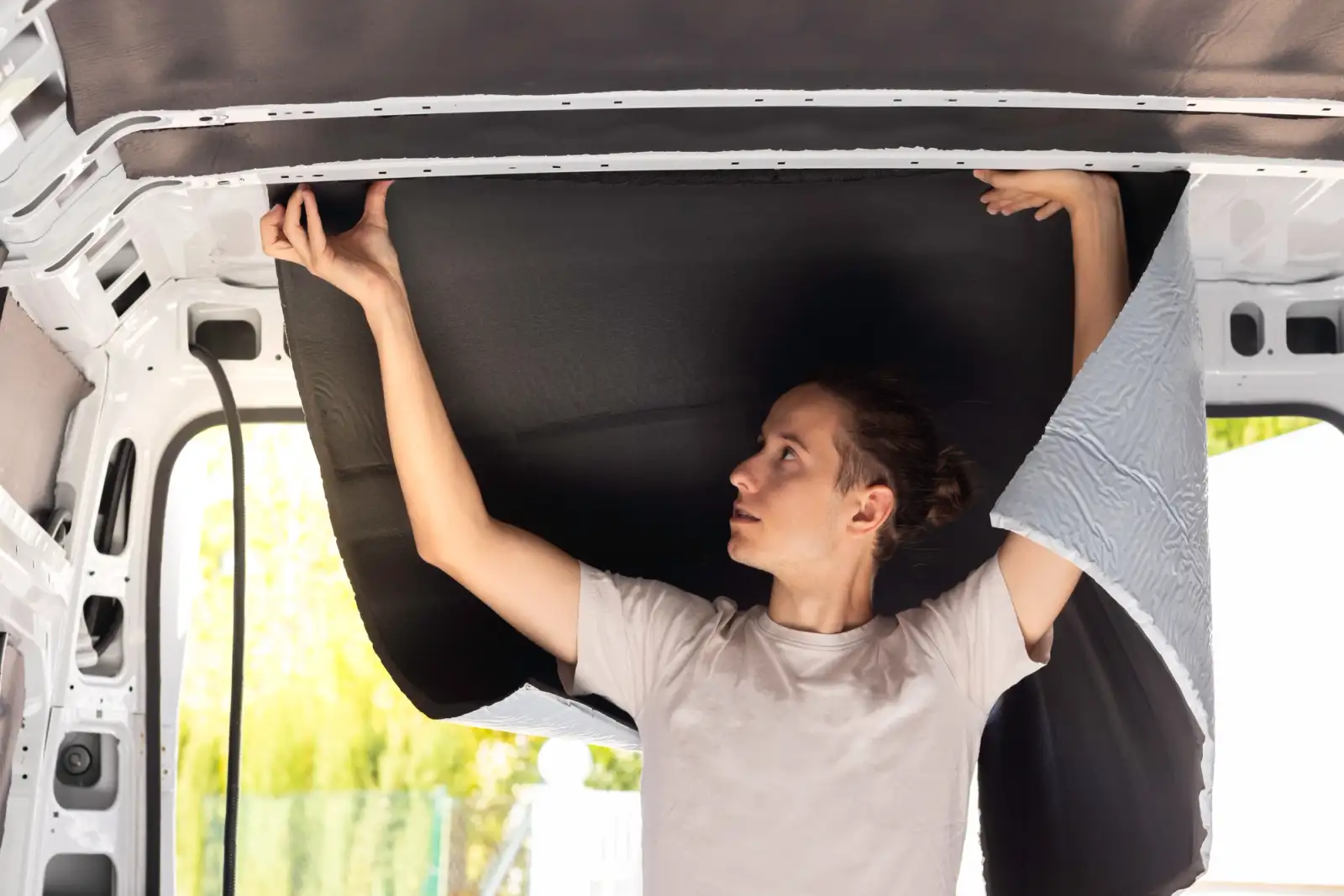
The ceiling finish may be what you see, but what sits behind it is just as important. Good insulation behind your chosen campervan ceiling material can make all the difference when it comes to comfort, helping keep the van cooler during Australia’s hotter months and warmer when temperatures drop. It can also help reduce road noise and minimise condensation, creating a more comfortable space to relax at the end of the day.
Insulation and Weight Balance
There are several insulation options commonly used behind lightweight campervan ceiling panels, including foam board, recycled fibre insulation and closed-cell foam products. The right choice will depend on your budget, climate and build style, but most travellers benefit from combining insulation with adequate ventilation to manage heat and moisture.
When exploring camper van ceiling ideas, it's also worth considering the impact of weight. Every kilogram added to the van contributes to the overall vehicle weight, which can affect payload, fuel consumption and handling. Lightweight van lining ideas such as composite panels, honeycomb boards and thinner timber products can help strike a balance between comfort, durability and weight savings.
Installation and Fastening Basics
Fortunately, achieving a neat finish doesn’t require a four-year apprenticeship. Many campervan roof lining ideas use a simple framework of timber battens or furring strips secured to the van’s structural ribs. Ceiling panels can then be fastened using screws, concealed clips or construction adhesives, depending on the chosen materials.
For those taking the DIY route but still desiring professional-looking results, careful measuring, taking time to create templates and ensuring each panel is properly secured will go a long way.
With this, most designs are achievable with patience, basic tools and good planning, no matter the materials.
Choosing the right campervan ceiling material comes down to balancing weight, budget, appearance and ease of installation. Here's a quick comparison of the most common options:
| Ceiling Material | Weight | Cost | DIY Friendly | Noise Reduction | Maintenance |
|---|---|---|---|---|---|
| Plywood Panels | Medium | $$ | Excellent | Moderate | Low |
| Tongue-and-Groove Timber | High | $$$ | Moderate | Moderate | Moderate |
| Timber Slats | Medium-High | $$$ | Moderate | Moderate | Low |
| Automotive Carpet | Low | $ | Excellent | Excellent | Low |
| Fabric Panels | Low | $$ | Good | Excellent | Low |
| Composite Panels | Very Low | $$$ | Good | Moderate | Very Low |
| Honeycomb Panels | Ultra-Low | $$$$ | Good | Moderate | Very Low |
Protecting Your Home Away From Home
A well-designed ceiling does more than improve the appearance of your campervan. It contributes to warmth, comfort, insulation and the overall feeling that your van is a genuine home away from home rather than simply a vehicle. Whether you've chosen traditional timber linings, lightweight composite panels or soft-lined finishes, the right ceiling can make every night on the road more enjoyable.
Of course, protecting your campervan involves more than choosing the right materials. From unexpected weather events to accidental damage on the road, having the right cover in place can provide valuable peace of mind while travelling throughout Australia.
At KT Insurance, we understand that every campervan is different. That's why we offer specialist campervan insurance designed for travellers who have invested time, money and passion into creating their ideal setup. To learn more about protecting your campervan and everything that makes it feel like home, explore our specialist RV insurance and get a quote from KT Insurance today.
Cover Built for Life on the Road
Over 30 years protecting Australian motorhome owners. Get your free quote or call us on 1300 261 261.