

Motorhome travel is more popular than ever in Australia. Whether you have just bought your first campervan or you are upgrading to a larger coachbuilt motorhome, one of the first questions most owners ask is: how much does motorhome insurance cost? It is a fair question, and the answer depends on more than you might expect.
The truth is, motorhome insurance cost in Australia varies widely depending on your vehicle, how you use it, and the level of cover you choose. In this guide, we will walk you through the typical costs, what affects pricing, how to keep premiums manageable, and what to look for in a policy that actually suits your lifestyle. At KT Insurance, we have been insuring motorhomes, caravans, and campervans for over 30 years, so we know what matters to Australian travellers.
The Short Answer — How Much Does Motorhome Insurance Cost?
In Australia, motorhome insurance premiums typically range from a few hundred dollars a year for older or lower-value campervans, through to several thousand dollars annually for newer, high-value motorhomes with comprehensive cover.
The reason the range is so broad comes down to the number of variables involved. Two motorhome owners can pay very different amounts based on the type of vehicle they drive, how often they travel, where they store it, and their driving history. The excess they choose and the optional cover they add also play a significant role. We will unpack each of these factors below.
Factors That Affect Motorhome Insurance Cost in Australia
Vehicle-Related Factors
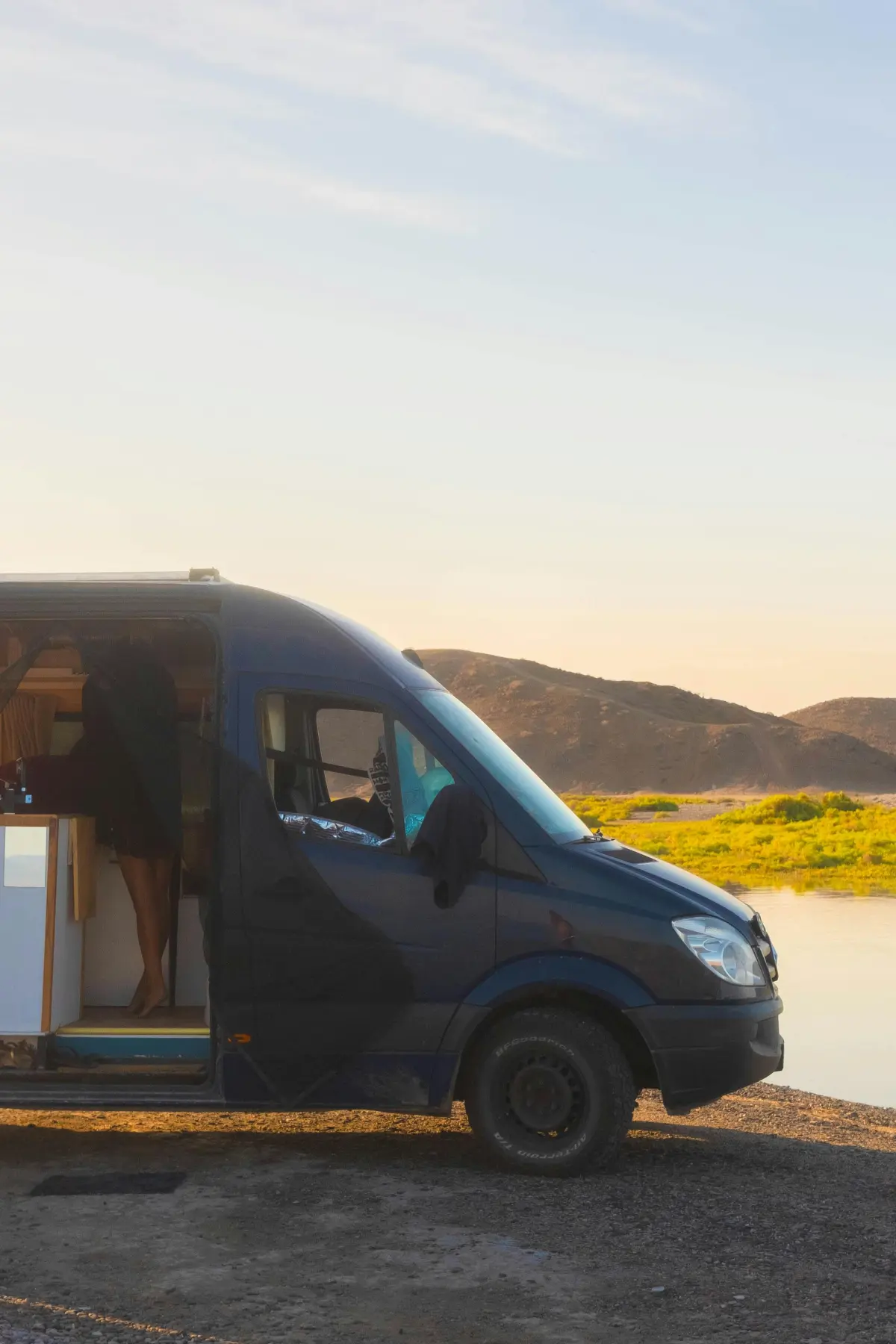
A campervan camping in Australia
The type of motorhome you own is one of the biggest factors in determining the cost of motorhome insurance. A compact campervan will generally cost less to insure than a large coachbuilt motorhome or converted bus, simply because the replacement cost is lower. Larger vehicles also carry higher repair costs and can be more complex to work on, which insurers factor into their pricing.
The age and value of your motorhome matter too. Newer vehicles with higher agreed values attract higher premiums because there is more at stake if something goes wrong. Agreed value cover — where you and your insurer lock in a set amount at the start of your policy — gives you certainty, but the higher that value, the more your premium will reflect it. Older motorhomes with lower values tend to be cheaper to insure, though they may carry their own risks around parts availability and condition.
If you have made modifications or fitted out a custom interior, that can also push your premium up. Solar systems, lithium batteries, upgraded appliances, custom cabinetry, and external accessories like awnings or bike racks all add to the total insured value of your motorhome. It is important to disclose these to your insurer — undisclosed modifications could leave you underinsured if you need to make a claim.
Usage and Lifestyle Factors
How often and how far you travel has a direct impact on motorhome insurance cost in Australia. Full-time travellers who live on the road year-round typically face higher premiums than someone who takes their motorhome out for a few weeks each year. Extended trips into remote or regional areas can also influence pricing, as recovery and repair costs tend to be higher in those locations.
Where you store your motorhome when it is not in use is another consideration. A motorhome kept in a locked garage or a secured storage facility is generally considered lower risk than one parked on the street or in an unsecured lot. Insurers assess the likelihood of theft, vandalism, and weather-related damage based on your storage arrangements, so secure storage can work in your favour when it comes to premium pricing.
Driver and Policy Factors
Your age, driving experience, and claims history all feed into your premium. A clean driving record with no recent claims will generally result in a lower insurance cost for motorhome cover. If you list multiple drivers on your policy — particularly younger or less experienced drivers — expect that to be reflected in the price.
The excess you choose also affects what you pay. A higher excess means a lower annual premium, but it also means you will pay more out of pocket if you need to make a claim. Optional extras like contents cover, roadside assistance, and windscreen protection add value to your policy but will increase the overall cost. It is about finding the balance that works for your situation.
What Is Included in Motorhome Insurance (and What Impacts Cost)
Comprehensive motorhome insurance provides the broadest level of protection, generally covering accidental damage, theft, fire, storm, flood, and third-party property damage. It costs more than basic or third-party-only options, but for most motorhome owners — especially those with higher-value vehicles, comprehensive cover offers significantly better protection.
Contents cover is another element that affects your premium. If you travel with personal belongings, electronics, cooking equipment, or outdoor gear inside your motorhome, adding contents cover ensures those items are protected too. For long-term travellers who carry more of their life on the road, this can be particularly important and well worth the additional cost.
It is also worth checking how your policy handles off-road travel and remote areas. Some generic vehicle insurers apply blanket exclusions for unsealed roads or limit cover outside certain distances. Specialist RV insurers tend to price this risk more realistically, because they understand that gravel roads and remote national parks are part of the Australian motorhome experience.
How to Reduce the Cost of Motorhome Insurance
There are a few practical ways to manage your premium. Choosing a higher excess, storing your motorhome in a secure location, keeping your agreed value accurate, and maintaining a clean claims history can all help keep costs down. Being realistic about your usage and only paying for cover you actually need also makes a difference.
That said, it is worth being cautious about simply choosing the cheapest policy available. A lower premium often comes with higher excesses, more exclusions, or reduced cover limits. When something goes wrong on the road, the value of your policy is measured by what it covers, not just what it costs.
What to Look for in a Motorhome Insurance Policy
When comparing policies, focus on the inclusions that matter most. Agreed value cover gives you certainty about what you will receive in the event of a total loss. Contents cover protects the belongings you carry with you. Emergency accommodation and medical assistance can be critical if something happens far from home. And modification cover ensures your custom fit-out is properly protected.
For Australian motorhome owners, it is also important to consider how your policy handles natural events like flood, bushfire, hail, and storm damage. These are realities of travelling across this country, and not all policies treat them the same way. Remote recovery: getting your motorhome towed from a breakdown in an isolated area is another inclusion worth checking. Generic vehicle insurance often falls short in these areas.
Finally, consider the claims experience. How easy is it to lodge a claim? Will you speak to someone who understands motorhomes, or will you be explaining what a coachbuilt is to a call centre? Claims handling matters as much as the premium itself, because that is when you find out whether your insurer really has your back.
Why KT Insurance Is a Trusted Option for Motorhome Owners
KT Insurance is not a generalist insurer that happens to offer motorhome cover. We are a specialist RV insurer, and motorhomes, caravans, and campervans are all we do. That means we understand the way Australians actually use their vehicles.
Our comprehensive motorhome insurance includes agreed value cover as standard, contents protection for your belongings on the road and in storage, medical emergency assistance up to $10,000, breakdown towing up to $1,000 with no excess, and flexible excess options from $500 to $5,000 so you can tailor your premium to suit your budget. We also cover animal collisions with one excess-free claim per policy period, and windscreen chip repairs up to $500 with no excess on the first claim.
We are proudly rated 4.8 stars on Trustpilot from over 2,000 customer reviews. When you insure with KT, you are choosing clarity, real support, and cover that is built for life on the road.
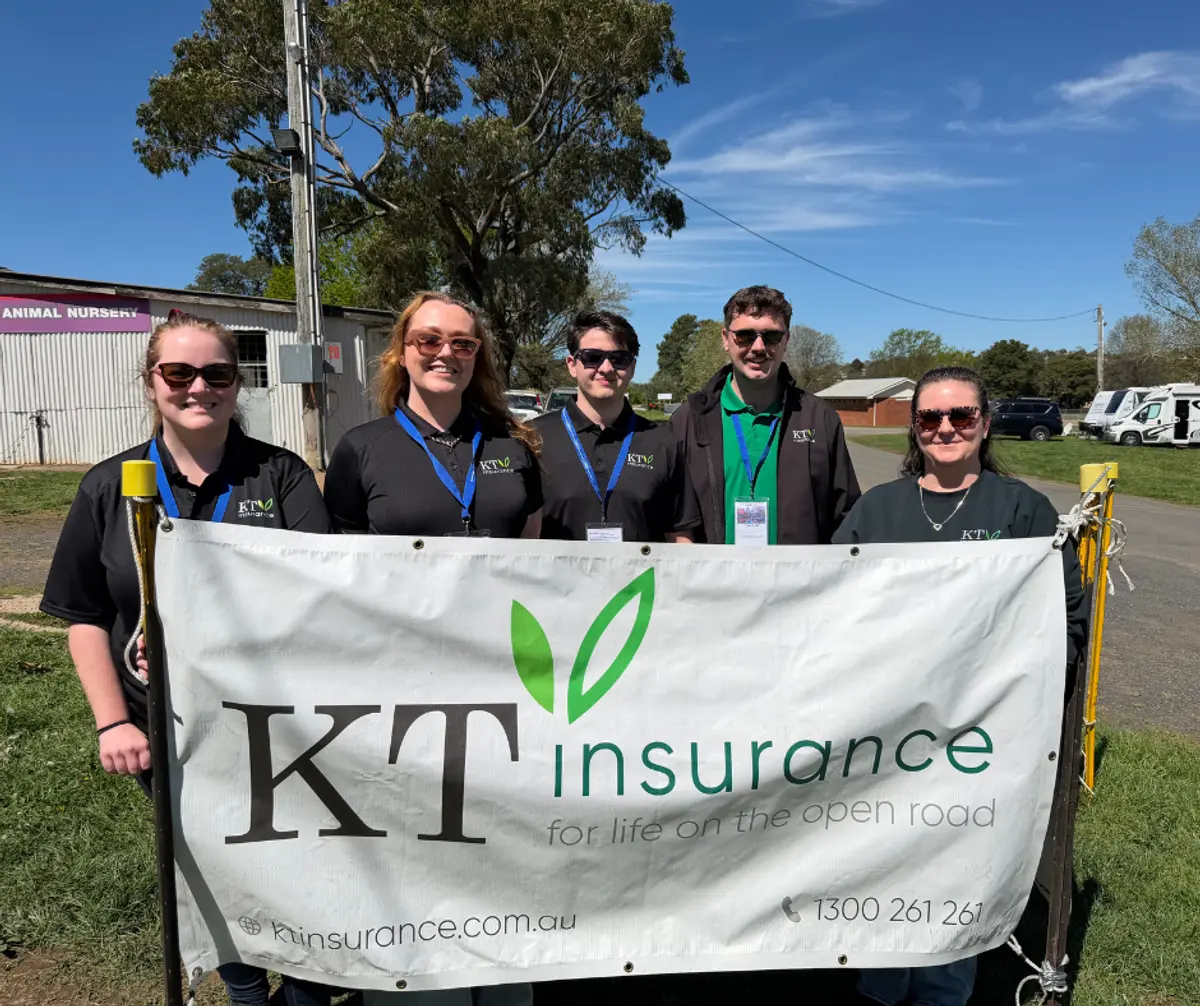
KT Insurance representatives with a sign
The Bottom Line on Motorhome Insurance Cost
So, how much does motorhome insurance cost? The honest answer is that it depends. Your vehicle type, value, age, usage, storage, driving history, excess, and the level of cover you choose all play a role. There is no single average cost of motorhome insurance that fits every owner, which is why it is important to get a quote based on your specific circumstances rather than relying on general estimates.
What we can say is that the right insurance is an essential part of responsible motorhome ownership. It protects not just your vehicle, but the lifestyle you have built around it.
Cover Built for Life on the Road
Over 30 years protecting Australian motorhome owners. Get your free quote or call us on 1300 261 261.