

Can’t decide between a camper trailer or a caravan? Chasing the permanent walls of a caravan but the manoeuvrability and adaptive nature of a camper trailer? You’re not alone. Plenty of Aussie travellers have stood in that exact spot, weighing up comfort against capability.
Someone had the same dilemma and decided to combine the two. The result is the hybrid caravan. A brilliant compromise that blends the best of both worlds.
In this guide, we’ll break down exactly what a hybrid caravan is, why they’ve exploded in popularity across Australia, and whether one could be the right home on wheels for your touring setup.
What Is a Hybrid Caravan?
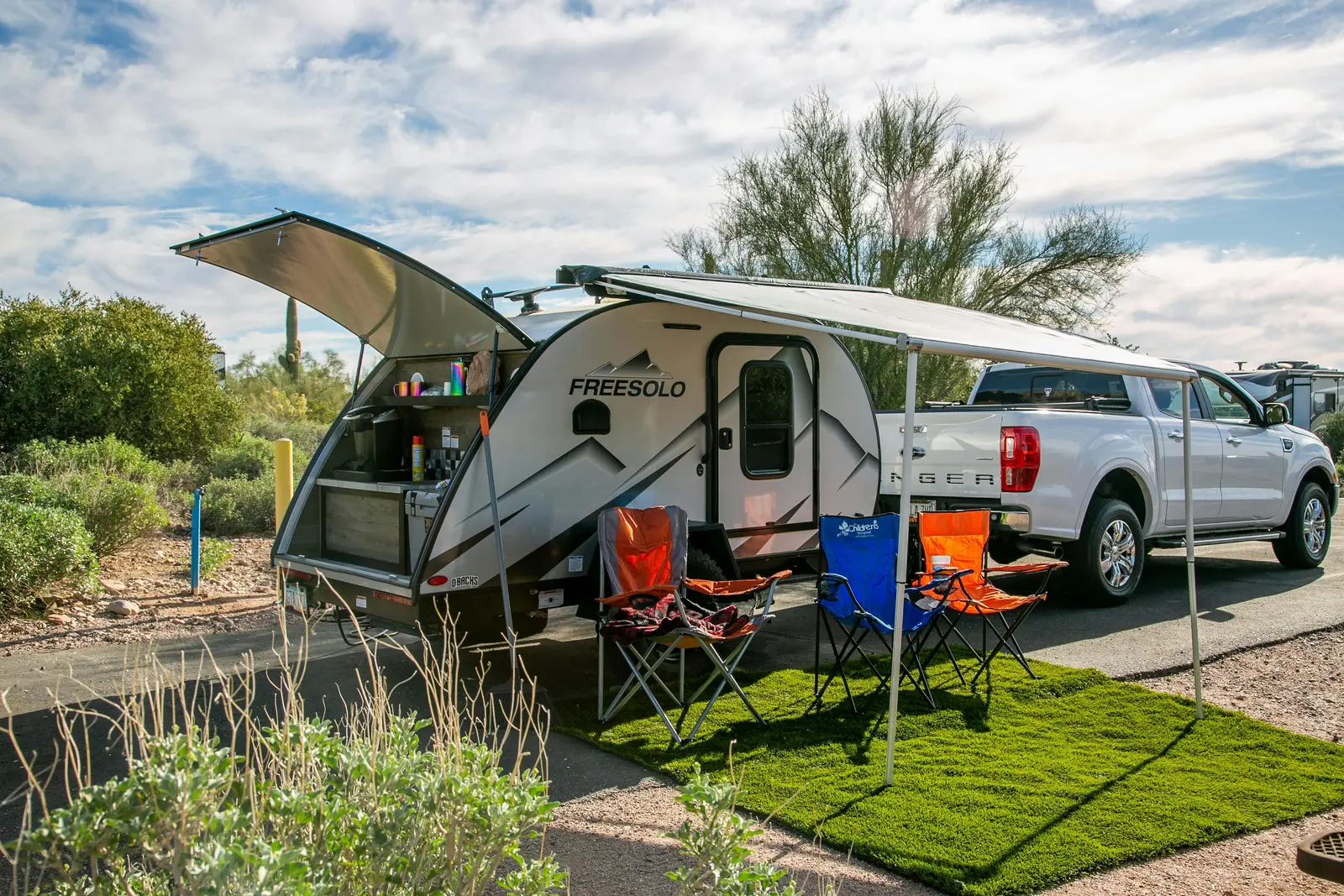
A hybrid caravan is a compact, hard-bodied van that combines the structural strength and comfort of a traditional caravan with the size, weight and off-road capability of a camper trailer.
In simple terms:
- It has solid walls instead of canvas
- It is smaller and lighter than most full-size caravans
- It is built to handle tougher Australian terrain
- It often includes outdoor cooking and pop-top or fold-out sections
Think of it as the middle ground between comfort and capability. For travellers who want to go further without towing a three-tonne beast behind them, hybrids are hitting that sweet spot.
The Rise of the Hybrid Caravan
Hybrid caravans have burst onto Australia’s caravan scene in recent years, and it’s not hard to see why.
Australia is big. Remote. Rough. Beautiful. Not every caravan is going to take you where you want to go. Whether it’s the size of the van, the weight, or the power required from your tow vehicle, traditional caravans can limit your access to remote travel.
Hybrids changed that equation.
Because of their camper trailer DNA, they are generally:
- Lighter
- Narrower
- Easier to manoeuvre
- Better suited to corrugated roads and tighter tracks
For anyone who dreams of pushing beyond sealed highways and exploring outback roads, that difference matters.
A Closer Look at Hybrid Caravans
If it’s going to be called a hybrid, it needs to take the best bits from both sides. Let’s unpack what that actually looks like.
Compact Design and Towability
One of the biggest advantages camper trailers have is their size. They’re light, compact and easy to drag around. Hybrids keep that compact footprint but ditch the heavy, hate-to-get-wet canvas and adopt a hard body shell.
Most hybrids:
- Sit under 2 metres wide
- Measure around 2.3 metres tall thanks to pop-top roofs
- Have a shorter overall length than traditional caravans
That reduced size makes a noticeable difference when navigating caravan parks, bush camps or tight coastal tracks. It also improves aerodynamics. A slimmer van slipstreams more easily behind your vehicle, which can help with fuel efficiency and reduce driver fatigue over long distances. If you’ve ever white-knuckled your way down a narrow track thinking about clearance on both sides, you’ll understand why this matters.
Off-Road Capability Built for Australia
This is where hybrid caravans really separate themselves from traditional vans.
Because of their smaller and lighter design, manufacturers can equip them with serious off-road hardware, including:
- Increased ground clearance
- Off-road tyres
- Independent suspension systems
- Reinforced chassis
The thinner body also allows access to places wider vans simply cannot go.
And unlike canvas camper trailers, the hard-shell exterior handles the elements far better. Rain, dust, coastal wind, extreme heat. The solid walls protect your setup and allow for air conditioning or heating in some models.
For anyone planning extended self-sufficient camping in unpredictable climates, that durability is a big plus.
Layout and Living Space
Hybrid layouts vary wildly depending on how heavily the manufacturer leans toward the caravan side of the DNA.
Some models skip internal bathrooms entirely and keep outdoor kitchens, maintaining that camper trailer feel. Others include internal ensuites, bunk beds and full kitchens.
Common features include:
- Pop-top roofs for extra headroom
- Fold-out bed sections
- Outdoor slide-out kitchens
- Compact internal dinettes
- Combination shower and toilet in larger models
The trade-off is space. Instead of sprawling interiors and island beds, you may have a king bed at one end and bunks for the kids at the other. Storage is clever but compact. Everything has a purpose.
If luxury and insulation are top priority, a full caravan may edge ahead. But if access and adaptability matter more, the hybrid often wins.
Hybrid Caravan vs Traditional Caravan: What’s the Difference?
Let’s simplify the comparison.
Size and Weight
Traditional caravans can be large, heavy and cumbersome. Hybrids are smaller, lighter and easier to tow. If you’re conscious of towing capacity or want a more forgiving drive on long trips, hybrids make life easier.
Off-Road Performance
Hybrids take this category comfortably. They are designed with Australia’s terrain in mind. When towing across corrugated roads, through river crossings or along rough coastal tracks, you’ll feel the difference compared to hauling a heavier van.
Comfort and Insulation
Traditional caravans usually offer:
- Better insulation
- Larger kitchens
- Full bathrooms
- More internal living space
Hybrids offer comfort, but in a compact package. You can still install air conditioning and heating in many models, but internal space will be tighter.
Setup Time
Camper trailers often require full setup with canvas and poles. Caravans require almost none.
Hybrids sit in the middle. Some fold-out sections or pop-top roofs need to be deployed, but setup is generally quicker and simpler than a full camper trailer. For travellers who value simplicity at the end of a long driving day, that balance is appealing.
How Much Does a Hybrid Caravan Cost?
Hybrid caravan pricing varies significantly depending on build quality, inclusions and origin.
Rough price brackets in Australia:
- Budget imported models: under $40,000
- Mid-range Australian-built hybrids: $50,000 to $90,000
- Premium off-road hybrids: $100,000 to $200,000
Before you start browsing, define your budget and your travel style.
Are you sticking to holiday parks and the occasional dirt road? Or are you planning serious remote travel across outback roads where durability is everything? That answer will narrow your options quickly.
Who Is a Hybrid Caravan Best Suited For?
The right setup always comes down to how you travel.
Hybrid caravans are ideal for:
- Families who need bunks but still want capability
- Couples chasing compact comfort
- Travellers upgrading from a camper trailer
- Those conscious of towing weight
If your dream trips include tighter bush camps, remote coastlines or extended touring across varying terrain, a hybrid deserves serious consideration.
Is a Hybrid Caravan the Right Compromise?
For many Australians, the answer is yes. It removes the biggest frustrations of camper trailers while avoiding the bulk and limitations of large caravans. It gets you further without sacrificing solid walls and real comfort.
Sometimes, landing in the middle really is the sweet spot.
Considering a caravan?
Safeguard your lifestyle