

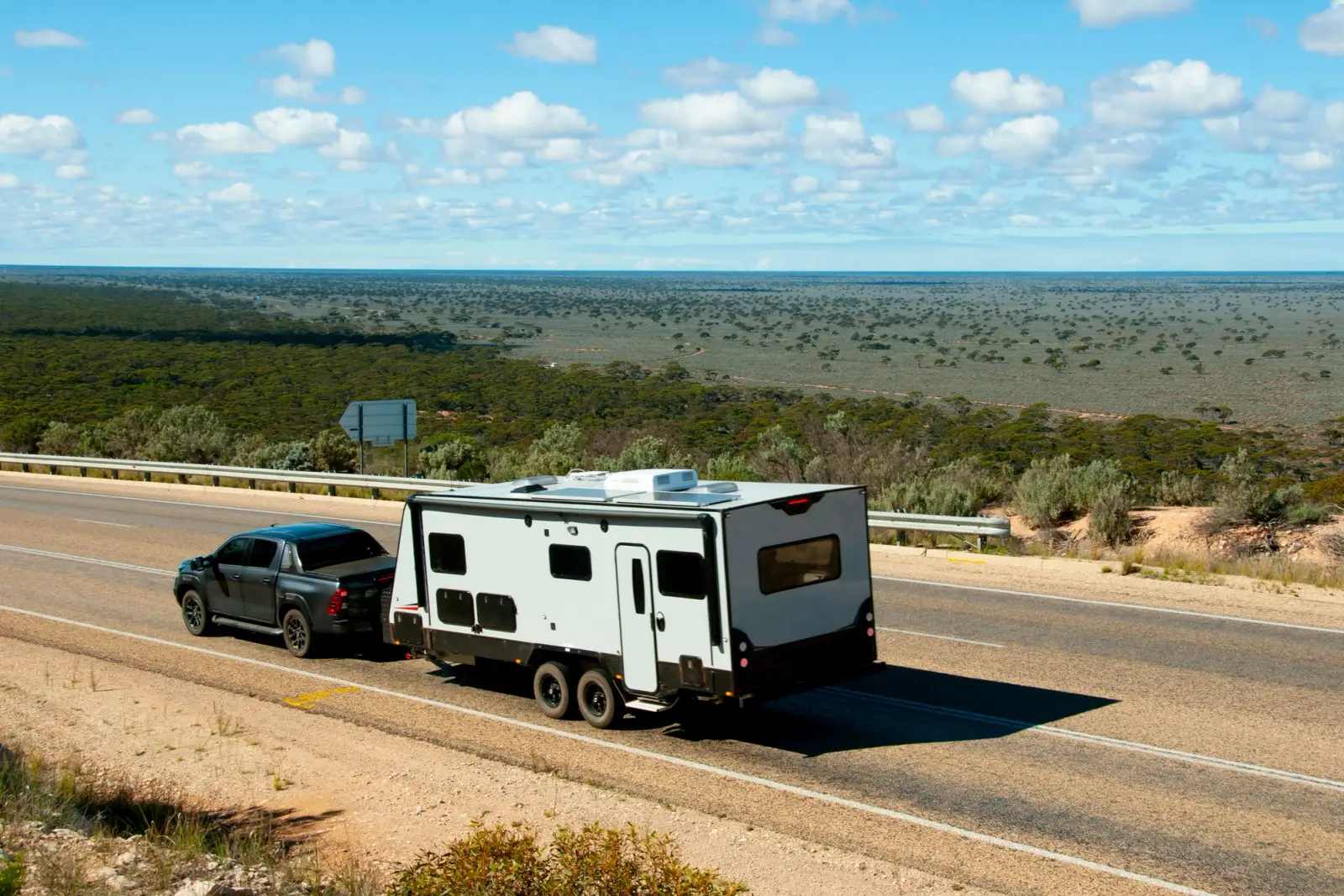
Do I need to buy a yank tank if I want to tow a caravan? Do I need a GVM upgrade? What are all these acronyms?
Knowing how to tow a caravan is one thing but getting across all the math that comes with it is another thing. We’ve compiled the calculations and considerations you’ll need when matching your vehicle with its towed companion so you can spend less time on your calculator at the dealership.
Maximum Braked Towing Limit
This one is for towing trailers with their own braking system (most modern builds). Your vehicle’s maximum braked towing capacity is the upper limit of what your vehicle can tow including the weight of the trailer and its load, as specified by the manufacturer. Anything heavier than the listed weight and your vehicle may not hold up. That’s not something you want to experience halfway to the next campsite. As a safety buffer, it’s best not to exceed 80-85% of your vehicle’s towing capacity.
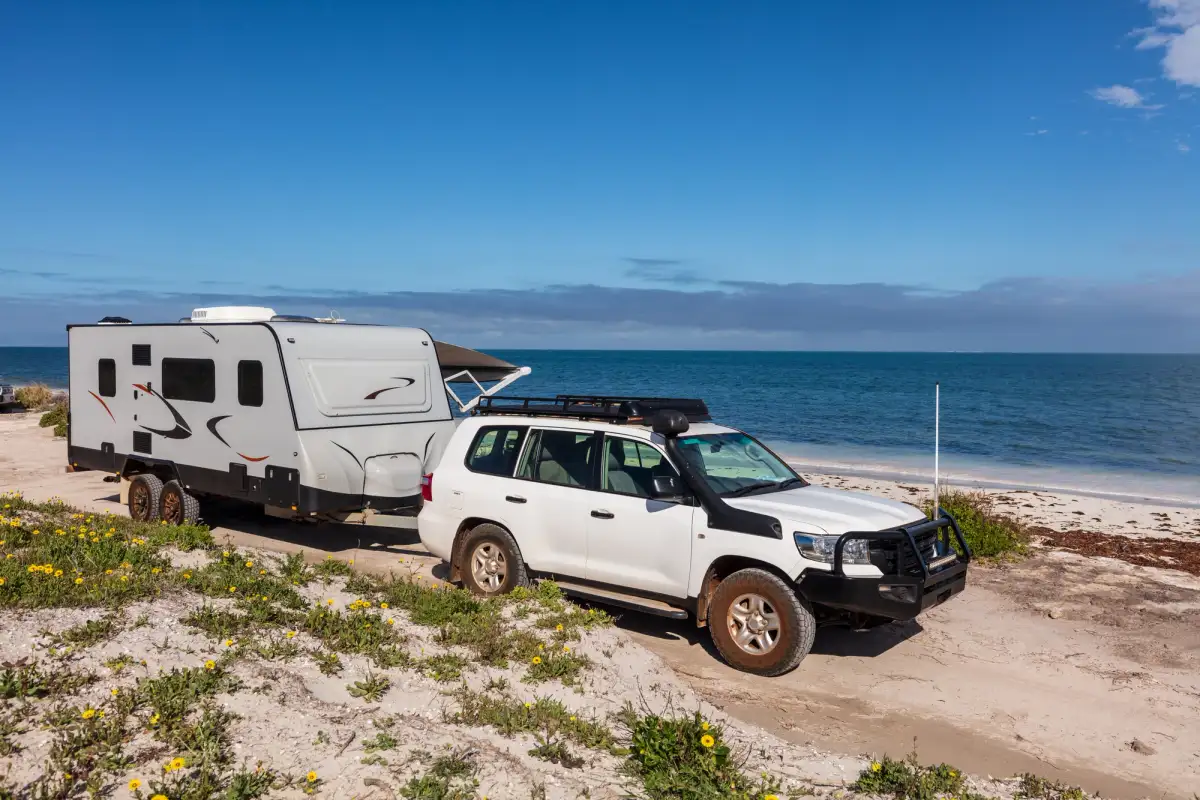
4x4 and caravan pictured camped at a beach
Maximum Unbraked Towing Limit
This limit applies to light trailers without brakes (including some box trailers, smaller camper trailers and some vintage caravans). Most of the time this limit is around 750kg, but many vehicles have a limit as little as 350kg depending on manufacturer specifications. It’s something to consider the next time you help a mate move house or redo that garden bed.
Gross Combination Mass (GCM)
Let’s solve some of these acronyms. The gross combination mass is the maximum weight of both the car and caravan combined, as set by the vehicle manufacturer.
This includes all people, luggage, gear, fuel, water, accessories, etc. Your gross combined mass counts anything and everything loaded into your car and caravan. This number cannot be increased.
Gross Vehicle Mass (GVM)
Gross vehicle mass means the maximum allowable weight your tow vehicle can be loaded up to set by vehicle manufacturers. This includes people, luggage, gear, fuel, tow ball mass from your caravan, everything.
Think of the gross vehicle mass as the most your tow vehicle can weigh, including the ball mass of the caravan you are towing. You can upgrade your GVM, however this will not increase your GCM or maximum braked towing capacity.
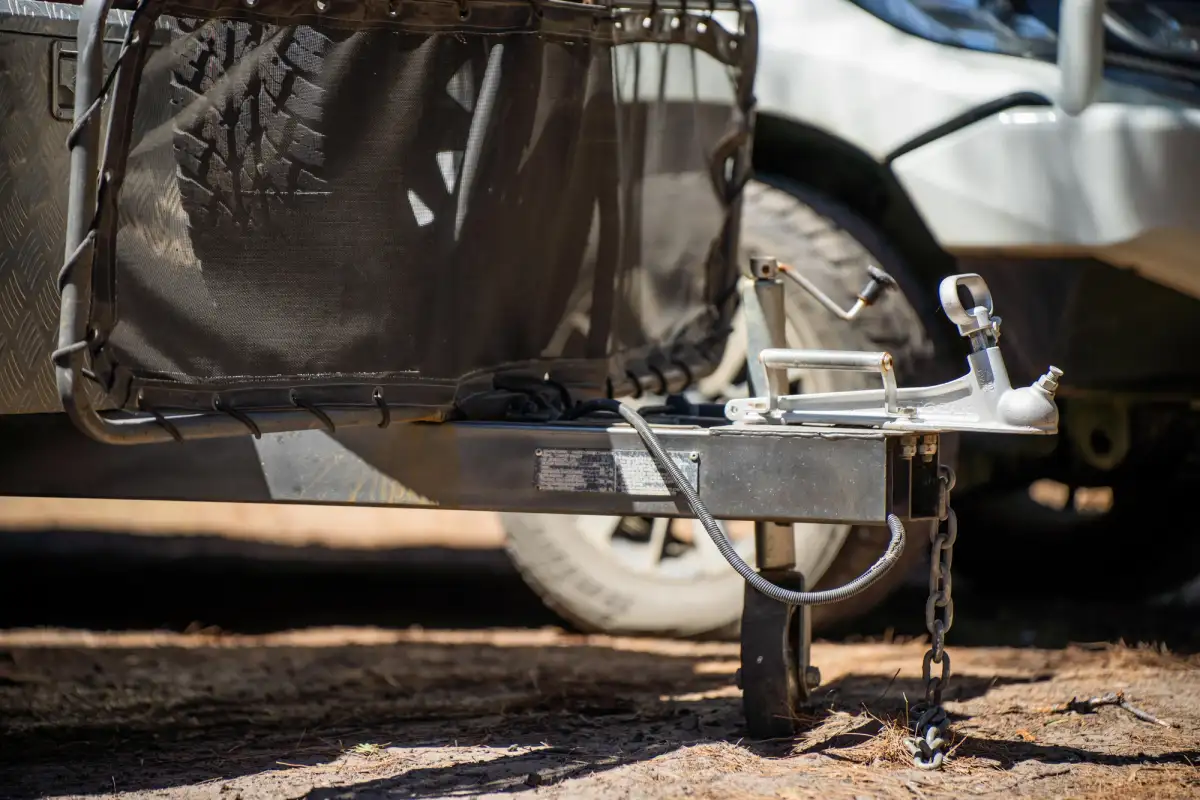
An unhitced trailer
Kerb Weight
The kerb weight is the vehicle’s unladen mass. This means all fluids and a full tank of fuel, as it sits on the kerb. This does not consider any aftermarket accessories.
Vehicle Tare Weight
This is the mass of a vehicle with all fluids and only enough fuel to
get it going, usually about 10 litres, as defined by the manufacturer.
Just like kerb weight, any added aftermarket accessories are not included.
Vehicle Payload
By subtracting your vehicle’s kerb weight from its GVM, you will arrive at its payload. This is how much your vehicle can carry, including passengers, luggage, modifications and any weight on the tow ball. This is usually measured with a full tank of fuel.
Example: GVM (3000kg) - kerb weight (2000kg) = vehicle payload (1000kg)
This means you would have 1000kg worth of passengers, luggage, modifications and weight on the tow ball before you would be over the vehicle’s maximum payload.
Maximum Tow Ball Mass
This amount will limit how much weight can be directly applied to the tow ball. In some vehicles, this is on a sliding scale, whereby the more load you have in the car, the less is allowed on the ball.
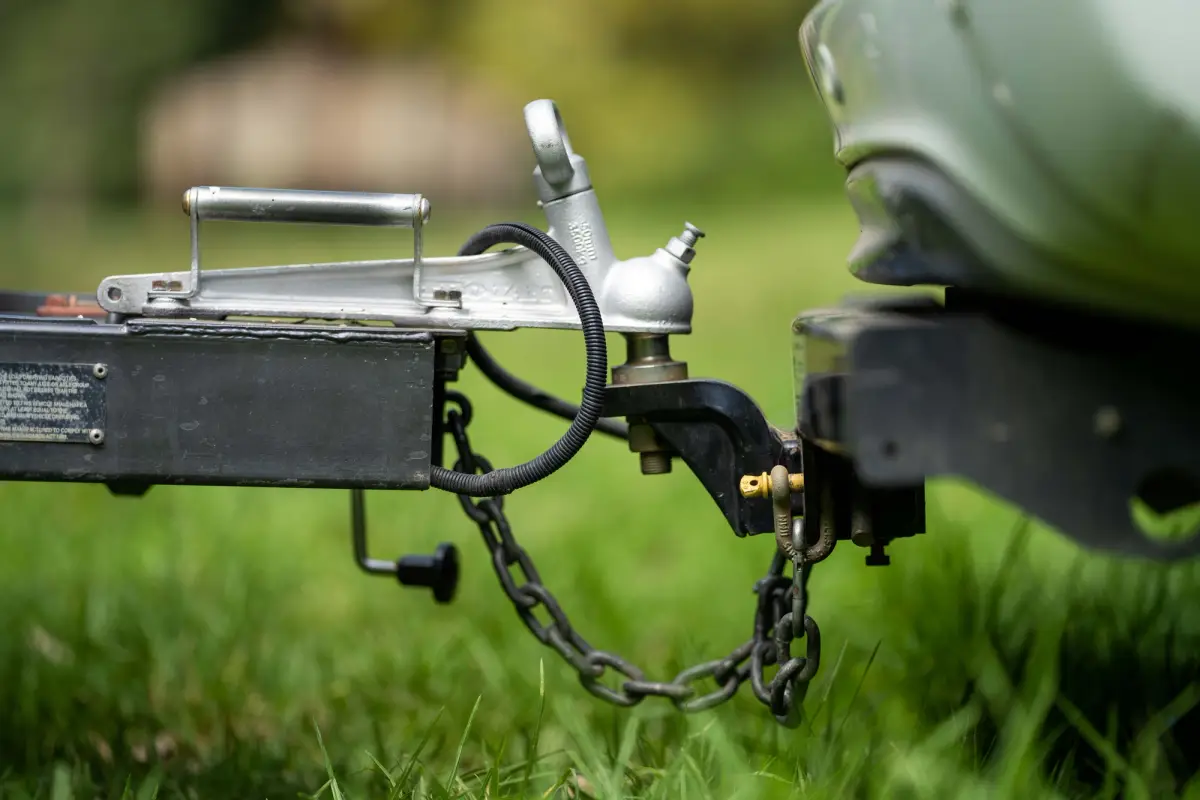
close-up photo of towball with trailer hitched
Aggregate Trailer Mass (ATM)
This is the trailer equivalent of GVM and is the maximum allowable mass of a trailer, set by the manufacturer. The trailer and its load can’t weigh more than this and be considered legal. The load includes the caravan’s weight, any modifications, water, luggage, etc. This is set at the time of build and is measured when unhitched from a tow vehicle.
Tow Ball Download
Also known as tow ball weight, ball load or hitch weight, this is
the actual mass the caravan applies on the hitch. This is generally
measured when the trailer leaves the factory, however it must remain
within the manufacturer’s specified limits, unlike a car’s tow ball rating.
A good tow ball mass to aim for is generally around 10 per cent of
the trailer’s weight.
Caravan Tare Weight
A caravan also has a tare weight, which is usually the trailer’s weight as it left the factory floor. It could be before or after extras are fitted, so if you’re unsure on the tare weight, having it weighed can be a good idea.
Gross trailer mass (GTM)
Gross trailer mass means the maximum total weight on the axles of the caravan when it is connected to a car. This is different from the aggregate trailer mass because when the caravan is hitched to a tow vehicle, the tow ball weight is being carried by the car and not on the caravan’s jockey wheel.
You can also work this out by taking the ATM of your caravan minus the tow ball weight.
Example: ATM (3000kg) - tow ball weight (200kg) = 2800kg
Caravan Payload
To find this number, subtract the caravan’s tare weight from the ATM.
Example: ATM (3000kg) - caravan’s tare weight (2500kg) = 500kg
If your caravan has heavy gear or water tanks full, this number can shrink quickly.
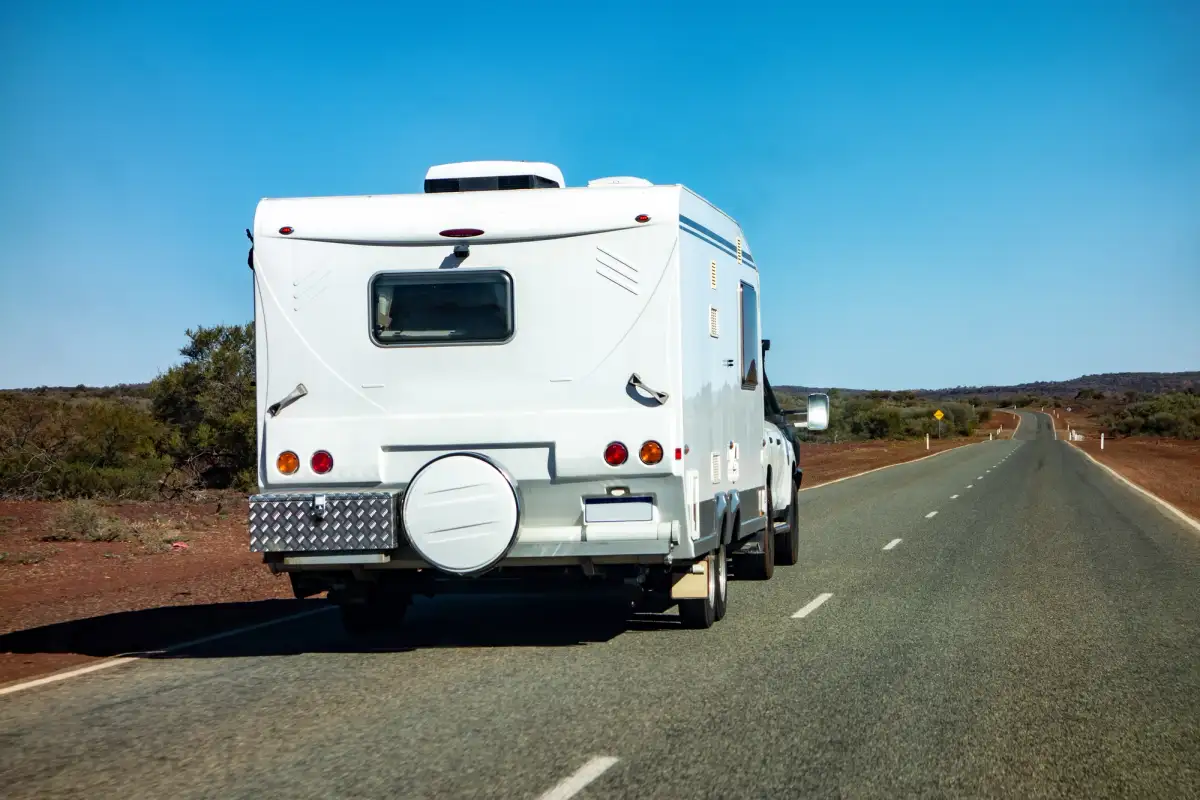
A caravan being towed on a highway
Tow Bar Capacity
Your vehicle’s and tow bar’s towing capacity need to work together, both for legal and structural reasons. If your tow bar is rated lower, you must not exceed those limits. If higher, you must not exceed your tow vehicle weights. Doing so won’t just land you in hot water, but you may find your trailer becoming an uncontrolled projectile halfway down the highway.
The Bottom Line
Matching your vehicle and caravan is not guesswork. It’s math with meaning.
Know these core numbers:
- Braked towing limit
- Unbraked towing limit
- GVM
- GCM
- Payload
- ATM
- Tow Ball Mass
If any one of these are exceeded, you could be in trouble.
Spend the time doing the numbers once, and your journey will be safer and more predictable for every kilometre you tow.
Always follow manufacturer specifications when matching a vehicle and trailer, as limits can vary between models.
Considering a caravan?
Safeguard your lifestyle