

If you're looking to make the most of your caravan or motorhome adventure without breaking the bank, free camping is the ultimate way to experience Australia's vast landscapes. From pristine national parks to quiet council rest areas, the country offers countless opportunities to park up and wake to stunning scenery, often without paying a cent. In this guide, we'll walk you through everything you need to know about free camping in Australia.
What is Free Camping?
Free camping in Australia refers to parking your RV overnight in a designated or permitted area without paying a camping fee. These spots come in several forms, each with its own set of rules and amenities. Understanding the different types will help you plan your trip responsibly and legally.
Council Rest Areas and Public Spaces
Many councils across Australia maintain free rest areas specifically designed for caravans and motorhomes. These are typically located near towns and offer basic facilities such as parking bays, sometimes with water taps or ablution blocks. They're often ideal for overnight stops and are well-signposted on major roads.
National Parks and State Forests
Australia's national parks often permit free camping in designated zones. These spots range from basic pull-off areas to small campgrounds with limited facilities. Requirements vary by park with some offer free camping in designated areas, while others charge a modest nightly fee. Always check each park's regulations before you arrive.
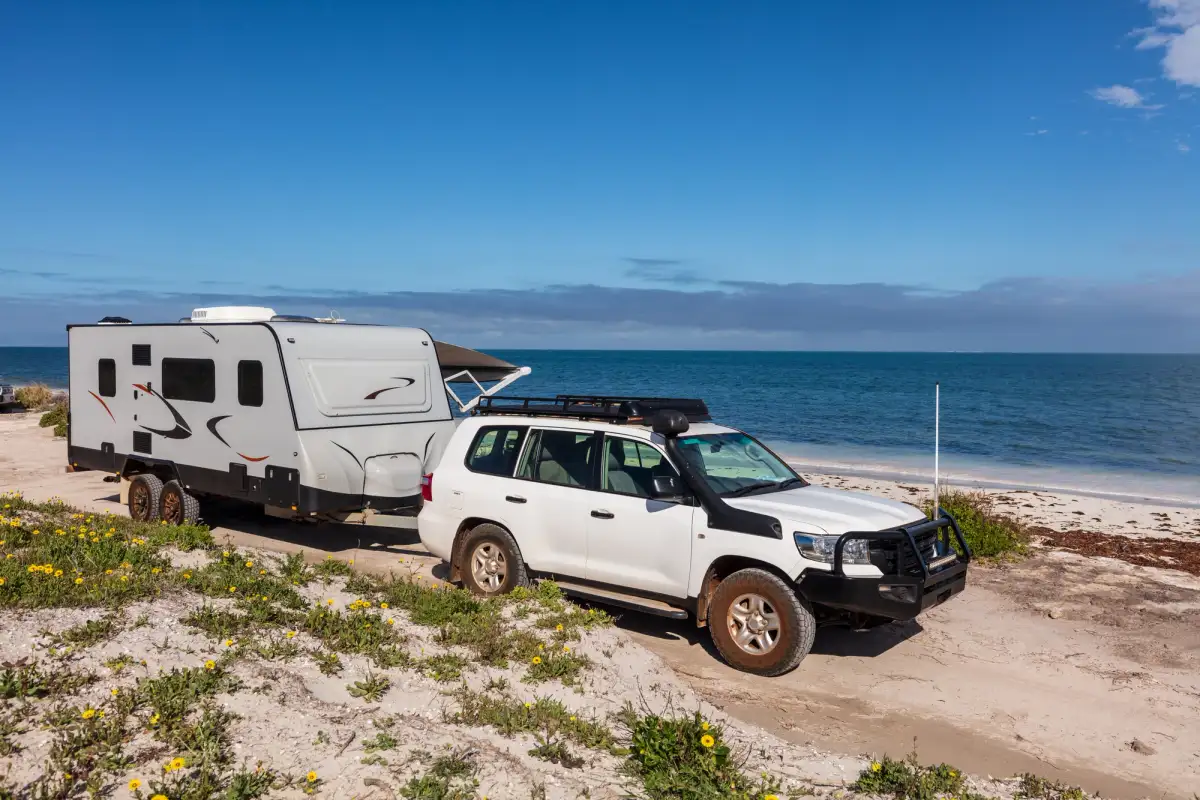
4WD towing a caravan camping near a beach
Station Stays
Many rural properties and working stations throughout outback Australia offer free or low-cost camping as a way to welcome travellers. These stays provide a unique insight into station life and often come with friendly locals happy to share stories about their region. Station stays are especially common in remote areas of Western Australia, South Australia, and the Northern Territory.
Apps and Online Resources
WikiCamps Australia is the grey nomad's best friend when it comes to free camping. This crowd-sourced app and website lists thousands of free and low-cost camping spots, complete with reviews, photos, and facility details. FreeRoam is another excellent app, offering similar information with offline capability. These tools are invaluable for discovering lesser-known free camps that other apps might miss.
State-by-State Highlights
Each state offers distinct free camping experiences, shaped by its climate, geography, and regulations. Here's what to expect in your travels across the country.
New South Wales
NSW is generous with free camping opportunities, particularly around the coast and inland regions. The stunning Blue Mountains offer numerous national park camping spots, whilst Booti Booti National Park near Forster has beautiful free camping right by the beach. For a taste of outback adventure, head inland to spots around Griffith and Hay, where you'll find quiet rest areas and sparse, dramatic landscape. The North Coast between Byron Bay and the Queensland border also hosts many free camps with river and beach access.
Queensland
Queensland's reputation as a free camping hotspot is well-deserved. The Fraser Coast region offers exceptional free camps, including along the Beautiful Discovery Coast. Mossman Gorge near Cairns provides tropical free camping amongst rainforest, while Lawn Hill National Park in the Gulf Savannah delivers genuine outback free camping with gorges, waterfalls, and wildlife. The western regions around Charters Towers and Innisfail are less crowded alternatives with equally compelling scenery.
Victoria
Though smaller than other states, Victoria punches above its weight with quality free camps. The Grampians National Park offers excellent facilities and stunning hiking, with free camping in certain areas. Along the Great Ocean Road, discrete spots near small towns provide access to iconic coastal scenery. The Murray River region is studded with quiet, tree-lined rest areas perfect for a gentle river-side stay.
South Australia
South Australia is a free camping paradise for those willing to venture inland. The Flinders Ranges showcase some of Australia's most dramatic scenery and accommodate free camping throughout the region. Further afield, the vast outback around Oodnadatta and William Creek offers authentic remote camping experiences. Coastal areas near the Limestone Coast provide dramatic cliffs and quiet free camps with ocean views.
Western Australia
WA's sheer size means endless free camping opportunities, particularly in the north. Karijini National Park and Purnululu National Park both offer exceptional free camps amidst ancient gorges and pristine wilderness. The Ningaloo Reef area provides tropical beaches without the crowds, whilst the Margaret River region combines free camps with award-winning wineries. Station stays are particularly popular in the outback regions around the Pilbara.
Northern Territory
The NT is the spiritual home of big lap free camping. Uluru-Kata Tjuta National Park has designated free camping zones surrounding the famous rock formations. The West MacDonnell Ranges near Alice Springs offer dramatic gorge camping, whilst further north, Kakadu National Park provides tropical free camps near waterfalls and ancient rock art. The very remote Stuart Well and Rainbow Valley areas reward intrepid travellers with solitude and staggering starry skies.
Tasmania
Tasmania's parks and reserves are increasingly free-camping friendly. Freycinet National Park offers free camping in certain zones with beach and coastal views, whilst Cradle Mountain-Lake St Clair National Park serves up mountain scenery and lakeside camping. The rugged southwest wilderness accessed via the Lyell Highway provides authentic free camping for adventurous rigs equipped for rougher conditions.
Free Camping Etiquette and Rules
Free camping comes with responsibility. Respecting the land and other travellers is essential to preserving these opportunities for future generations of caravanners and motorhomers.
Leave No Trace. Take all rubbish with you, use established campsites where possible, and avoid camping on vegetation. Grey water should be disposed of responsibly—check local regulations about where it's acceptable to dump. Never use soap or shampoo near water sources.
Respect Quiet Hours. Most free camps have informal quiet hours, typically 10 pm to 7 am. Keep noise levels low during these times, including music, generators, and voices. A considerate attitude costs nothing and keeps the free camping spirit alive.
Check Sign Posts and Local Rules. Each area has specific regulations—some prohibit overnight camping, others allow a maximum number of nights. Aboriginal lands have particular protocols. Take time to read signage and ask locals if you're unsure.
Be Aware of Permits and Closures. Some parks require permits (often free) or impose seasonal closures. Check before you head out. Council websites and the parks management authority for each state publish this information.
Safety Tips for Free Camping
Whilst free camping is generally safe across Australia, remote free camps do require sensible precautions. Trust your instincts—if a spot doesn't feel right, move on. Camp with others when possible, especially in very remote regions.
Tell Someone Your Plans. Before heading to a remote free camp, let a friend or family member know your route and expected return. Check in with them regularly, especially if you have limited mobile reception.
Carry Essential Supplies. When free camping far from towns, ensure you have adequate water (at least 100 litres), fuel, spare parts, and first aid supplies. A satellite communicator like a PLB (Personal Locator Beacon) or InReach device is wise for very remote camping.
Know Your Vehicle. Regular maintenance is crucial before any big trip. Ensure your rig's tyres, fluids, battery, and brakes are in top condition. Carry a well-stocked tool kit and spare parts relevant to your vehicle.
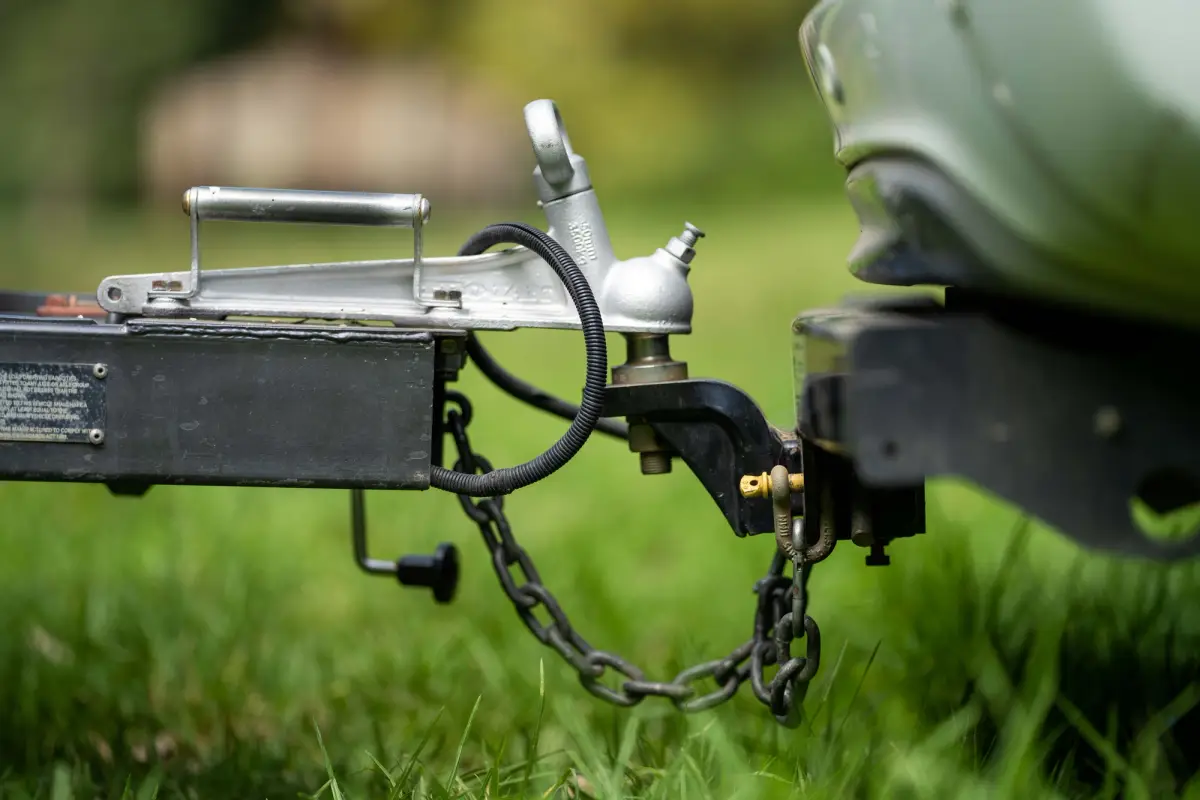
A caravan hitch
Stay Weather Aware. Australia's weather can be extreme. During the wet season in the north (November–April), roads can become impassable. Summer heat in inland and outback regions demands respect, so try and camp in shaded areas and stay hydrated.
Gear for Off-Grid Free Camping
Proper preparation makes free camping comfortable and safe, especially when heading to remote locations with minimal facilities.
Water Systems. Carry capacity to store water collected from bores or tanks at facilities. A water filter or purification system is essential for safety. Many modern caravans and motorhomes have decent tanks, but for extended off-grid stays, consider upgrading storage capacity.
Power Solutions. Reliable power means a charged phone, working fridge, and lighting. Solar panels paired with a quality battery system are ideal for extended free camping. Alternatively, a generator can supplement, though be mindful of noise and fuel requirements.
Sanitation. Composting toilets or holding tanks are essential for responsible off-grid camping. Ensure you can empty holding tanks at appropriate facilities and maintain your sanitation system properly. Biodegradable soap and toilet paper are environmentally responsible choices.
Navigation and Communication. Maps are invaluable, but modern GPS and offline map downloads (such as Maps.me) are equally important. A UHF radio lets you stay in touch with other travellers and stay informed about conditions ahead. Mobile coverage can be patchy in remote regions.
Start Your Free Camping Adventure
Australia's free camping culture is built on respect, responsibility, and a deep love of this vast, beautiful country. By following these guidelines, checking local rules, and preparing properly, you'll unlock some of the most rewarding experiences available to caravanners and motorhomers. Whether you're seeking solitude in the outback, coastal beauty, or a quiet rest area between towns, free camping lets you travel at your own pace and write your own story.
Hitting the road?
Safeguard your lifestyle